
Building wealth isn’t about chasing quick wins—it’s about consistency, patience, and strategy. Long-term investing is one of the most reliable ways to grow your money, secure retirement, and fund major life goals without constant stress or burnout.
For founders, business owners, and startup professionals, the challenge is even sharper: income can be unpredictable, time is limited, and risk is already high in your core business. That makes a structured, long-term investing approach essential—not optional.
This guide breaks down how to think about long-term investing, how to build a strategy that works across global markets, and how to align your investments with real-life goals like retirement, financial independence, and lifestyle freedom.
Why Long-Term Investing Still Wins (Across Markets)
Short-term trading gets attention. Long-term investing builds wealth.
Across the US, UK, and Europe, historical data consistently shows that diversified portfolios held over decades outperform frequent trading strategies. The reason is simple: markets fluctuate daily but grow over time.
Key advantages of long-term investing:
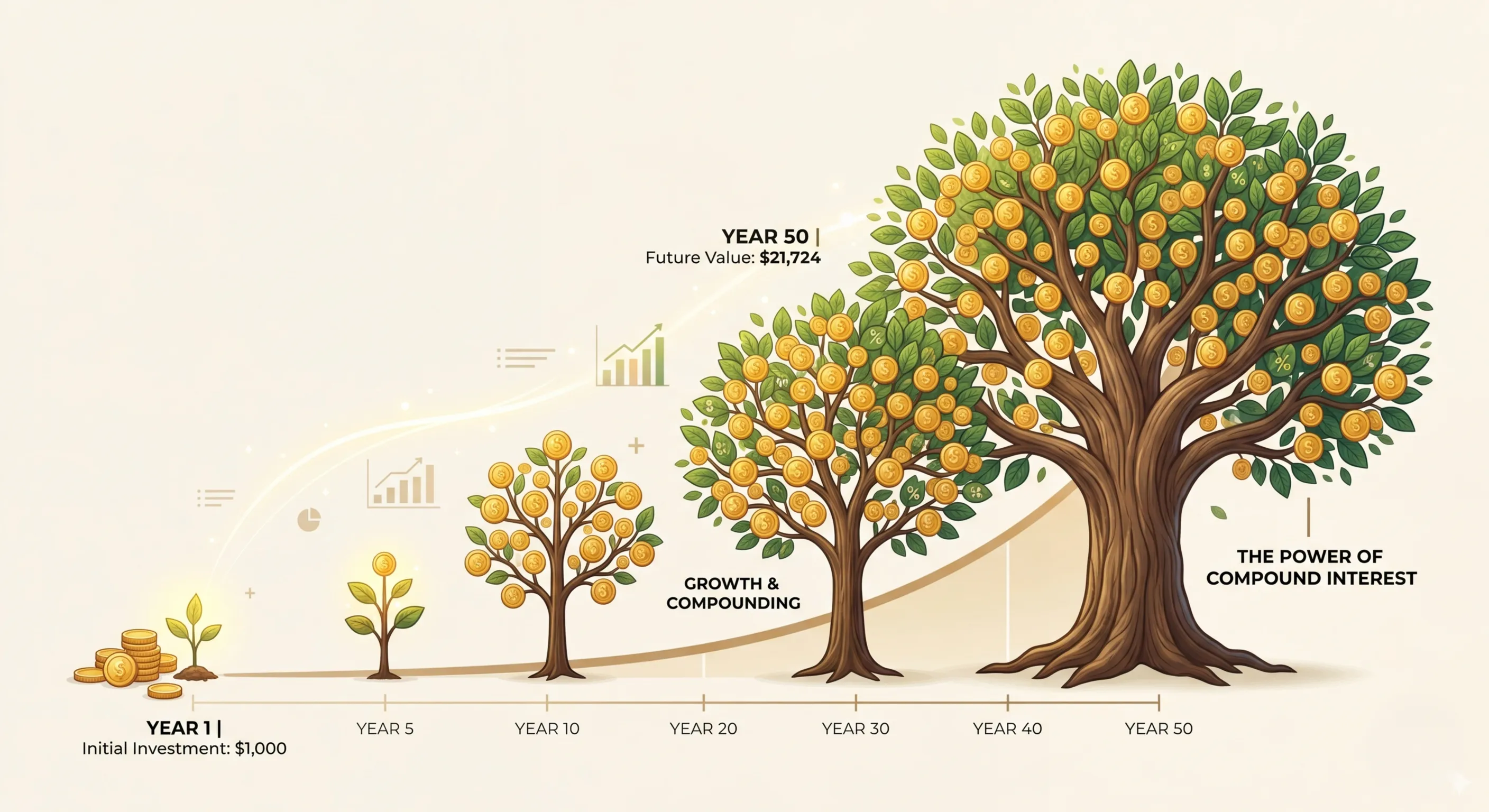
Compounding returns amplify growth over decades
Lower transaction costs compared to active trading
Reduced emotional decision-making during volatility
Tax efficiency in many regions (e.g., ISAs in the UK, 401(k)s in the US)
Real-world perspective:
A $10,000 investment growing at ~7% annually becomes:
~$19,600 in 10 years
~$38,700 in 20 years
~$76,100 in 30 years
This is the power of compound interest investing—and it rewards time more than timing.
Defining Your Big Financial Goals First
Before choosing assets, define why you’re investing. Your strategy should match your goals.
Three core goal categories:
1. Retirement
Timeline: 20–40+ years
Focus: Growth, compounding, tax efficiency
Example:
US: 401(k), IRA
UK/EU: Pension plans, ETFs
2. Financial Freedom
Timeline: 10–25 years
Goal: Replace income with investments
Strategy: Build passive income streams
3. Major Life Goals
Timeline: 3–15 years
Examples:
Buying a home
Funding a startup
Relocating internationally
Action framework:
Define timeline (years)
Estimate required capital (range-based)
Example: $500,000–$1M (≈€460,000–€920,000)
Match risk level to time horizon
Clarity here prevents costly mistakes later.
Core Principles of a Strong Long-Term Portfolio Strategy
A solid long-term portfolio strategy is simple, repeatable, and resilient.
1. Diversification Across Assets
Avoid relying on a single asset class. Typical allocation:
Stocks (growth)
Bonds (stability)
Real estate (income + hedge)
Cash (liquidity)
Global diversification matters:
US equities (innovation-driven growth)
European markets (dividend stability)
Emerging markets (higher risk, higher potential)
2. Consistency Over Timing
Trying to “buy low, sell high” consistently is unrealistic. Instead:
Invest regularly (monthly or quarterly)
Use dollar-cost averaging
Stay invested during downturns
3. Rebalancing Periodically
Markets shift your allocation over time. Example:
You start with 70% stocks / 30% bonds
After a strong market run → 85% stocks
Rebalancing restores your risk profile and locks in gains.
Best Investment Vehicles for Long-Term Growth

Choosing the right tools simplifies execution.
1. Index Funds & ETFs
Ideal for most investors. Benefits:
Low fees
Broad market exposure
Passive management
Examples:
S&P 500 index funds (US)
FTSE All-World ETFs (global exposure)
2. Retirement Accounts (Tax-Advantaged)
Maximize these first where possible. Examples:
US: 401(k), Roth IRA
UK: ISA, SIPP
EU: Country-specific pension plans
Tax advantages significantly boost long-term returns.
3. Real Estate Investments
Adds diversification and income. Approaches:
Direct property ownership
REITs (Real Estate Investment Trusts)
4. Business & Startup Investments
Relevant for founders. Important:
Your business is already a high-risk asset
Balance it with diversified, lower-risk investments
How to Build a Long-Term Investing Plan (Step-by-Step)

Step 1: Set Clear Targets
Define:
Retirement age
Income needed annually
Total investment goal
Example:
$60,000/year retirement income
Requires ~$1.5M–$2M portfolio (depending on withdrawal rate)
Step 2: Choose Asset Allocation
Based on risk tolerance:
Conservative: 40% stocks / 60% bonds
Balanced: 60% stocks / 40% bonds
Growth: 80–90% stocks
Step 3: Automate Contributions
Remove decision fatigue.
Monthly auto-investing
Percentage of income (e.g., 15–25%)
Step 4: Track Progress Annually
Avoid daily checking. Review:
Portfolio performance
Allocation drift
Goal alignment
Step 5: Adjust as Life Changes
Major triggers:
Business growth or exit
Relocation (US → EU, etc.)
Family changes
Common Mistakes in Long-Term Investing
Avoiding mistakes is as important as choosing the right strategy.
1. Trying to Time the Market
Missing just a few of the best days significantly reduces returns.
2. Overconcentration
Too much in:
Your own business
A single stock
One country’s market
3. Emotional Investing
Selling during downturns locks in losses.
4. Ignoring Inflation
Cash loses value over time.
€100,000 today ≠ €100,000 in 20 years
5. High Fees
Even 1–2% extra fees can reduce long-term returns dramatically.
Balancing Business Risk with Investment Stability

For founders, this is critical. Your business already:
Depends on market conditions
Has high volatility
Requires constant attention
Smart counterbalance:
Invest in passive, diversified assets
Avoid tying all wealth to your company
Example:
Founder with $500K in business equity
Invests separately:
$100K in ETFs
$50K in bonds
$50K in real estate
This reduces overall financial risk.
Long-Term Investing Across Regions (US, UK, Europe)
United States
Strong equity market performance
Tax-advantaged accounts widely available
United Kingdom
ISA allows tax-free gains
Strong dividend-focused investing culture
Europe (EU)
More conservative investing trends
Growing ETF adoption
Country-specific tax rules vary
Key takeaway:
Regardless of location, the principles of long-term investing remain the same:
Diversify
Stay consistent
Think decades, not months
Conclusion: Build Wealth Without Burning Out
Long-term investing is not about complexity—it’s about discipline. By focusing on:
Clear goals
Consistent contributions
Diversified portfolios
Long-term thinking
You can build wealth that supports:
Retirement security
Financial independence
Major life ambitions
Key takeaway:
Your biggest advantage isn’t capital—it’s time.
Next step:
Start with a simple plan:
Choose one global ETF
Automate monthly investing
Commit to a 10+ year horizon
Small, consistent actions today compound into meaningful wealth tomorrow.