
Building wealth today isn’t just about having a single paycheck—it’s about creating multiple income streams without burning out. Whether you're a finance analyst, strategist, or entrepreneur, relying on one income source is increasingly risky in a volatile global economy.
From layoffs in the United States to rising living costs across Europe and the UK, income diversification is no longer optional—it’s essential. But here’s the problem: most people approach it the wrong way. They pile on side hustles, overcommit, and quickly hit exhaustion.
This guide breaks down how to build multiple income streams strategically, without sacrificing your energy, focus, or long-term performance.
Why Multiple Income Streams Matter in 2026
The concept of income diversification is rooted in risk management. Just as investors diversify portfolios, professionals should diversify income.
Key Benefits
Financial stability: If one stream drops, others sustain you
Faster wealth building: Compounding income sources accelerate growth
Career flexibility: Less reliance on a single employer
Inflation protection: Multiple revenue sources hedge against rising costs
Global Context
In the US, many professionals are turning to side income due to job volatility
In the UK and EU, gig economy participation has surged
In Canada and Australia, remote work has enabled global earning opportunities
However, more income streams don’t automatically mean more success—execution matters.
The Biggest Mistake: Doing Too Much Too Fast
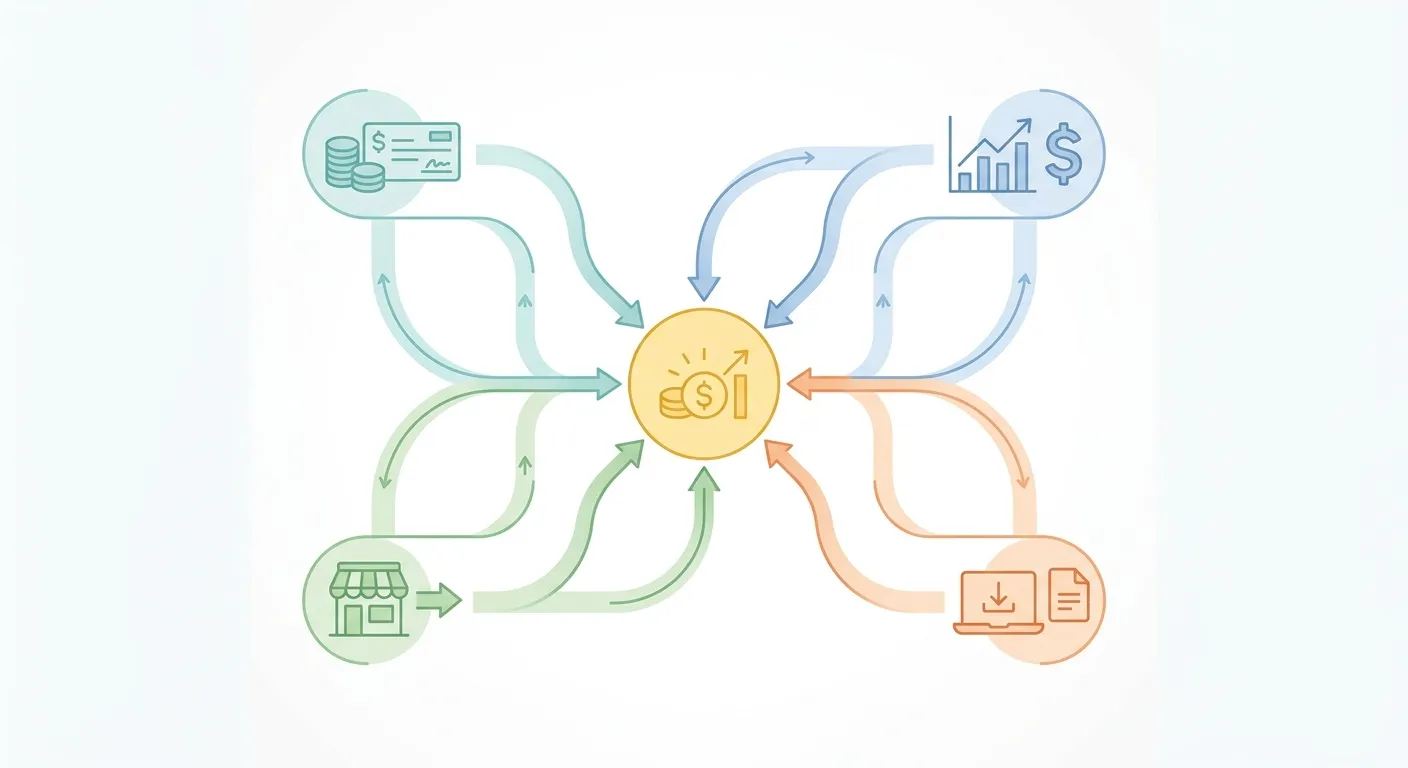
The fastest way to fail is trying to build 3–5 income streams at once.
Common Burnout Triggers
Launching multiple side hustles simultaneously
Choosing labor-intensive income streams
Lack of systems or automation
No clear priority or timeline
Reality check:
Most successful people build income streams sequentially, not simultaneously.
The Better Approach
Focus on:
One primary income stream
One secondary scalable stream
Expand only after stabilizing both
The 3-Tier Income Framework (Smart Diversification)
To build multiple income streams without burning out, use this structured model:
1. Active Income (Foundation)
This is your main job or business. Examples:
Salary (e.g., $60,000/year or €50,000/year)
Freelancing or consulting
Goal: Stability and cash flow
2. Semi-Passive Income (Growth Layer)
Requires upfront effort, then less maintenance. Examples:
Digital products (eBooks, templates)
Online courses
Affiliate websites
Goal: Scalable income with moderate effort
3. Passive Income (Wealth Layer)
Minimal ongoing effort after setup. Examples:
Dividend stocks
Rental income (e.g., €800/month property income in Europe)
Index funds
Goal: Long-term financial independence
How to Choose the Right Income Streams

Not all income streams are equal. The key is alignment.
Use the “3S Filter”
Evaluate each opportunity based on:
Skill: Do you already have expertise?
Scalability: Can it grow without proportional effort?
Sustainability: Can you maintain it long term?
Example
A finance strategist might choose:
Active: Full-time role
Semi-passive: Paid newsletter or financial templates
Passive: ETF investments
Avoid trends that don’t align with your strengths—misalignment leads to burnout.
Build Systems, Not Hustles
The difference between burnout and sustainability is systems.
Replace This:
Trading time for money repeatedly
Manual processes
Constant content creation without use
With This:
Automated workflows
Reusable assets
Scalable distribution channels
Examples of Systems
Email funnels for digital products
Scheduled content pipelines
Automated investment contributions
Key Insight:
You don’t need more work—you need better systems.
Time Management for Multiple Income Streams
Time—not money—is your most limited resource.
The 70–20–10 Rule
Allocate your effort like this:
70%: Core income (job/business)
20%: Building second income stream
10%: Testing new opportunities
Weekly Execution Plan
5–10 hours/week for secondary income
Batch tasks (e.g., content creation once weekly)
Avoid daily context switching
Tools That Help
Task management systems
Calendar blocking
Automation tools
Consistency beats intensity.
Scalable Income Ideas That Reduce Burnout

Focus on high-use income streams.
Best Options
1. Digital Products
Templates, guides, financial calculators
One-time creation, ongoing sales
2. Content Monetization
Blogs, newsletters, YouTube
Monetized via ads, affiliates, sponsorships
3. Investing
Index funds or ETFs
Real estate (where feasible)
4. Licensing & Royalties
Sell intellectual property
Earn recurring income
Common Mistakes to Avoid
1. Chasing Every Trend
Stick to proven models aligned with your expertise.
2. Ignoring Recovery Time
Burnout often comes from lack of rest, not excess work.
3. Underestimating Setup Time
Most income streams require 3–6 months before results.
4. No Exit Strategy
Know when to scale, pause, or drop a stream.
A Step-by-Step Action Plan
Step 1: Stabilize Your Primary Income
Ensure consistent cash flow.
Step 2: Choose One Scalable Secondary Stream
Example: digital product or affiliate site.
Step 3: Commit 8–10 Weeks
Focus deeply—no distractions.
Step 4: Build Systems Early
Automate as soon as possible.
Step 5: Evaluate and Optimize
Track income vs time invested.
Step 6: Add a Passive Layer
Invest profits into long-term assets.
Conclusion: Build Smart, Not Hard
Creating multiple income streams without burning out is not about working harder—it’s about working smarter. Key Takeaways:
Start with one additional income stream, not many
Focus on scalable, system-driven models
Use structured frameworks like the 3-tier system
Prioritize energy management as much as time management
Reinvest profits into passive income assets
Next Step:
Identify one income stream aligned with your skills and commit to building it over the next 60–90 days. Avoid distractions, track progress, and optimize as you go.
Disclaimer
This content is for informational purposes only and does not constitute financial advice. Always evaluate decisions based on your individual circumstances.