
Debt can feel overwhelming—especially when multiple credit cards, personal loans, or student debt pile up. Interest keeps growing, minimum payments barely move the needle, and financial stress starts affecting your daily life.
A clear debt-free roadmap changes everything. Instead of guessing or reacting, you follow a structured plan that reduces anxiety and builds momentum.
This guide breaks down exactly how to pay off credit cards and loans efficiently—without burnout. Whether you’re in major economies.
Why Most People Struggle to Get Out of Debt
Before fixing the problem, it’s important to understand why debt lingers.
1. Minimum Payments Trap
Credit card companies design minimum payments to keep you in debt longer. Paying only the minimum on a balance of $5,000 (€4,600) could take years—and cost thousands in interest.
2. Lack of a Clear Plan
Many people try to “pay more when possible,” but without a structured system, progress is inconsistent.
3. Emotional Burnout
Debt repayment often fails because it feels restrictive. Without small wins, motivation drops quickly. Key Insight: Debt payoff is not just financial—it’s psychological. Your strategy must address both.
Step 1: Build Your Debt Inventory (Full Financial Clarity)

You can’t fix what you don’t fully understand.
List Every Debt You Have:
Create a simple table with:
Total balance
Interest rate (APR)
Minimum monthly payment
Due date
Example: Debt TypeBalanceInterestMinimumCredit Card A$3,20022%$90Personal Loan$7,0009%$210Student Loan€12,0004%€150
Why This Matters:
Identifies high-interest debt (priority targets)
Shows total financial exposure
Removes uncertainty (a major stress trigger)
Tip: Many EU and UK users can access this data through banking apps or credit reports.
Step 2: Choose Your Debt Repayment Strategy
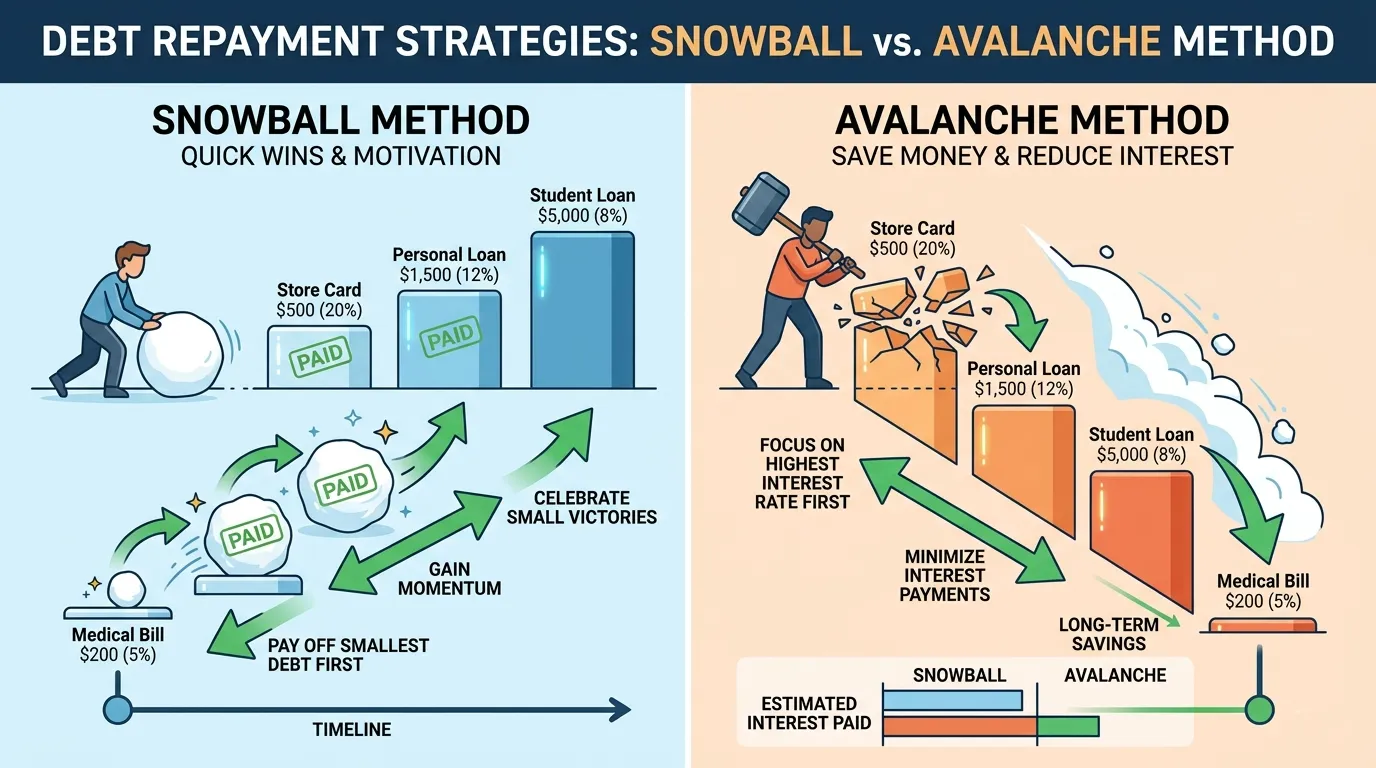
The two most effective methods are widely used across the US and Europe:
1. Debt Snowball Method (Best for Motivation)
Pay off the smallest debt first
Then roll that payment into the next
Why it works:
Quick wins build momentum
Reduces psychological resistance
2. Debt Avalanche Method (Best for Saving Money)
Pay off highest interest debt first
Minimizes total interest paid
Example:
Pay off a 22% credit card before a 5% loan
Which One Should You Choose?
If you struggle with consistency → Snowball
If you’re disciplined and want efficiency → Avalanche
Hybrid Approach: Start with snowball for motivation, then switch to avalanche.
Step 3: Create a Realistic Debt Payoff Budget
A strong budget isn’t restrictive—it’s strategic.
The 3-Part Budget Framework:
1. Essentials (50–60%)
Rent, utilities, food, transport
2. Financial Goals (20–30%)
Debt payments
Savings buffer
3. Lifestyle (10–20%)
Entertainment, subscriptions
Key Rule:
Increase your debt payment category aggressively—temporarily. Example:
Current payment: $300/month
Adjusted payment: $500–$700/month
Even an extra $200/month can cut years off your repayment timeline.
Step 4: Lower Your Interest Rates (Fastest Win)

Reducing interest is one of the most overlooked strategies in any debt-free roadmap.
Options to Consider:
1. Balance Transfers
Move high-interest credit card debt to a 0% intro offer
Common in the US and UK
2. Debt Consolidation Loans
Combine multiple debts into one lower-interest loan
3. Negotiate Rates
Call your lender and request a lower APR
Works more often than people expect
Real Impact Example:
$5,000 at 22% → ~$1,100 interest/year
Reduced to 12% → ~$600 interest/year
That’s nearly 50% savings.
Step 5: Automate and Simplify Payments
Automation removes friction and ensures consistency.
Set Up:
Automatic minimum payments (avoid penalties)
Scheduled extra payments (weekly or biweekly)
Why It Works:
Prevents missed payments
Builds discipline without effort
Reduces mental load
Pro Tip: Biweekly payments can reduce interest slightly and accelerate payoff.
Step 6: Increase Income (Accelerate Your Timeline)
Cutting expenses has limits—income growth does not.
Practical Ways to Boost Income:
Freelancing (writing, design, development)
Selling unused items
Monetizing a skill or hobby
Part-time remote work
Realistic Target:
Add an extra $300–$1,000/month toward debt. Even in lower-income regions of Europe or developing economies, digital work creates global earning opportunities.
Step 7: Avoid Common Debt Repayment Mistakes
1. Closing Credit Cards Too Early
Closing accounts can hurt your credit score (especially in the US and UK systems).
2. Ignoring Emergency Savings
Without a buffer, unexpected expenses push you back into debt. Minimum Goal:
$500–$1,000 (€400–€900) starter emergency fund
3. Trying to Be Perfect
Missing one month doesn’t mean failure. Consistency matters more than perfection.
Step 8: Build Habits That Keep You Debt-Free

Getting out of debt is one milestone—staying out is the real goal.
Core Habits:
Track spending weekly
Avoid lifestyle inflation
Use credit cards strategically (or not at all)
Build savings alongside debt repayment
Long-Term Strategy:
Once debt is gone, redirect payments into:
Investments
Retirement accounts
Emergency funds
Example Debt-Free Timeline
Let’s say:
Total debt: $10,000 (€9,200)
Monthly payment: $600
Timeline:
Without strategy: 3–5 years
With optimized roadmap: 18–24 months
The difference comes from:
Higher payments
Lower interest
Consistency
Conclusion: Your Debt-Free Roadmap Starts With One Move
A successful debt-free roadmap isn’t about extreme sacrifice—it’s about clarity, structure, and momentum.
Key Takeaways:
List and understand all your debts
Choose a strategy (snowball or avalanche)
Increase payments strategically
Reduce interest wherever possible
Automate everything
Boost income to accelerate results
Next Step:
Start today by creating your debt inventory and choosing your repayment method. That single action sets everything in motion.