
Starting your investing journey can feel overwhelming. Between stocks, ETFs, risk, and market volatility, many beginners delay taking action. But the reality is simple: the earlier you start, the more powerful your results can be.
This beginner’s guide to investing breaks everything down into clear, practical steps—from investing your first dollar to building a diversified portfolio that can grow over time. Whether you're a student, professional, or founder, this guide gives you a roadmap you can actually follow.
Why Investing Matters More Than Saving Alone
Saving money is important—but it’s not enough. Inflation gradually reduces the value of your cash. For example:
$1,000 today may buy significantly less in 10–15 years
Average inflation rates across organisations typically range from 2%–5% annually
Investing helps you:
Grow wealth over time
Outpace inflation
Build long-term financial security
Simple Example
Saving: $5,000 stays $5,000
Investing: $5,000 growing at ~7% annually could double in about 10 years
This is why learning how to start investing early is critical.
Step 1: Understand the Basics of Investing
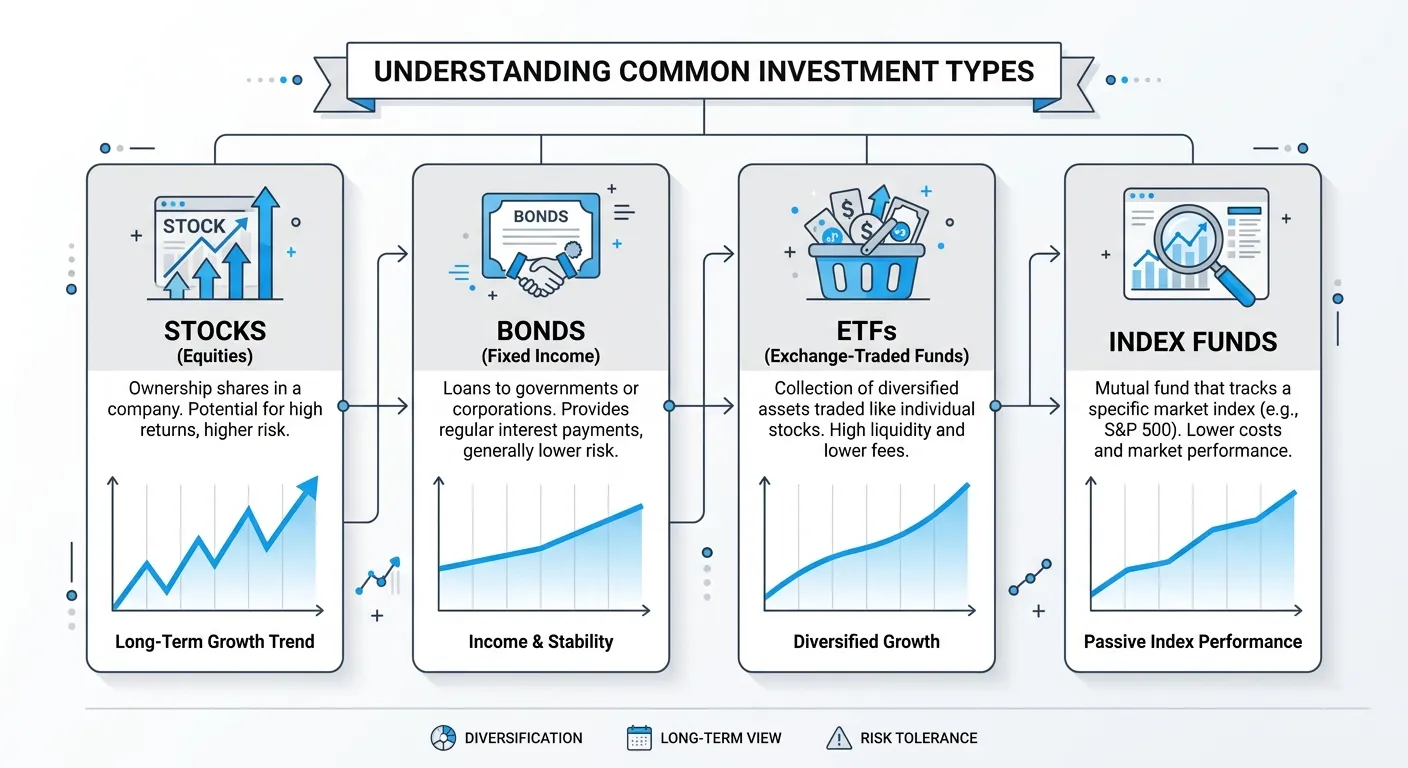
Before putting money into the market, you need to understand a few core concepts.
What Is Investing?
Investing means putting your money into assets that have the potential to grow over time. Common asset types include:
Stocks – Ownership in a company
Bonds – Loans to governments or corporations
ETFs (Exchange-Traded Funds) – Collections of multiple assets
Index Funds – Funds tracking market indexes like the S&P 500
Risk vs. Return
Higher potential returns usually come with higher risk
Lower-risk investments offer more stability but slower growth
Key takeaway: Don’t avoid risk—learn how to manage it.
Step 2: Set Clear Financial Goals
Your investment strategy depends on why you're investing.
Common Goals
Building wealth long-term (10–30 years)
Saving for a home
Retirement planning
Funding a startup or side business
Define Your Time Horizon
Short-term (0–3 years): Lower-risk investments
Medium-term (3–10 years): Balanced strategy
Long-term (10+ years): Growth-focused investing
Example
A US-based professional investing for retirement may choose long-term stock ETFs
A UK or EU student saving for a master’s degree in 3 years may prioritize stability
Step 3: Start With Your First Investment
You don’t need thousands to begin. Many platforms in the US, UK, and Europe allow:
Fractional shares
Minimum investments as low as $10–$100 (or €10–€100)
Where to Start
Beginner-friendly options include:
Index funds
ETFs
Robo-advisors (automated investing platforms)
Example Allocation for Beginners
If you’re starting with $500 (or €500):
60–80% in broad market ETF
10–20% in international exposure
10–20% in bonds or safer assets
This creates a foundation for a diversified portfolio.
Step 4: Build a Diversified Portfolio
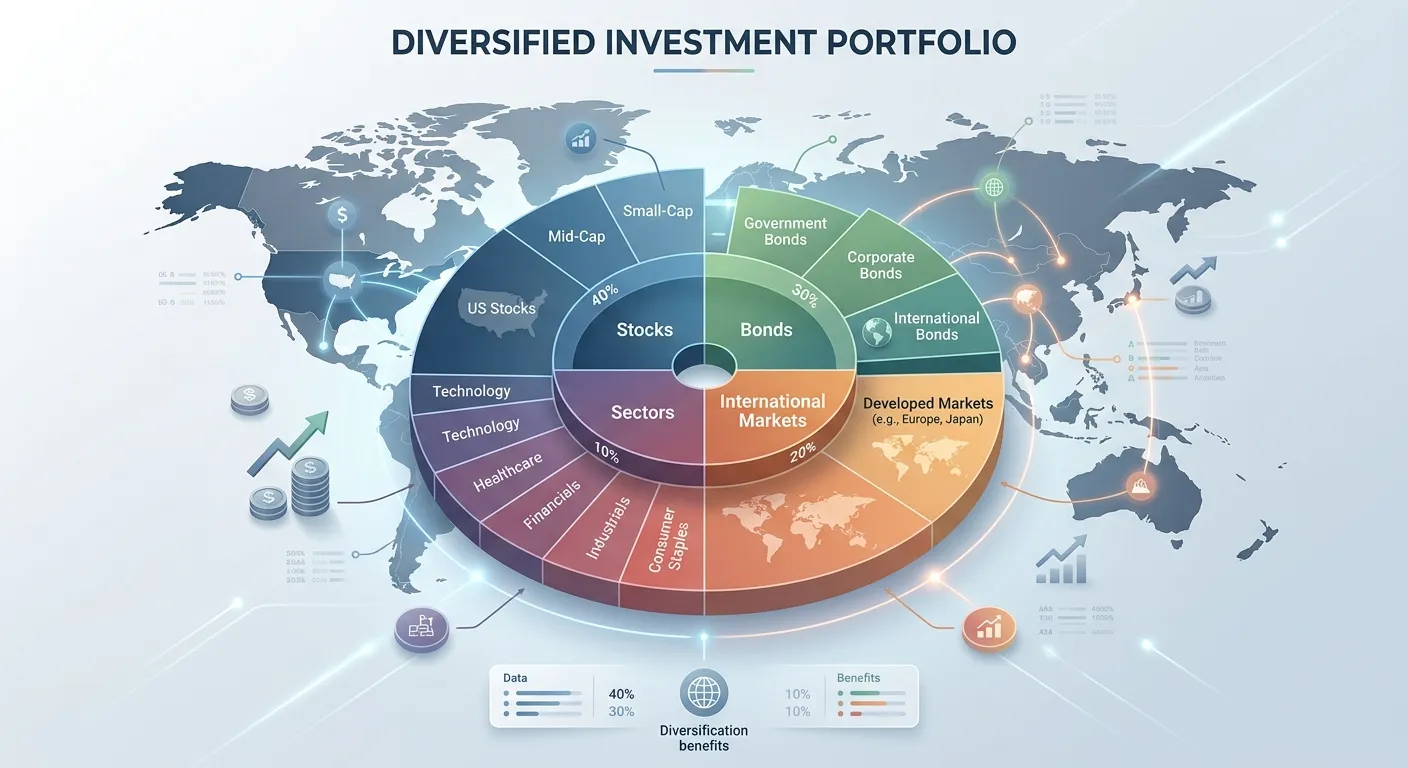
Diversification is one of the most important concepts in investing.
What Is Diversification?
Spreading your investments across different assets to reduce risk.
Why It Matters
If one investment performs poorly, others may balance it out.
Simple Diversification Strategy
1. Across Asset Classes
Stocks
Bonds
Cash equivalents
2. Across Regions
US market
European market
Global exposure
3. Across Industries
Technology
Healthcare
Finance
Energy
Example Portfolio (Global Beginner)
70% global stock ETF
20% bond ETF
10% emerging markets
This approach works well for investors in:
United States
UK and Western Europe
Canada and Australia
Step 5: Choose an Investment Strategy
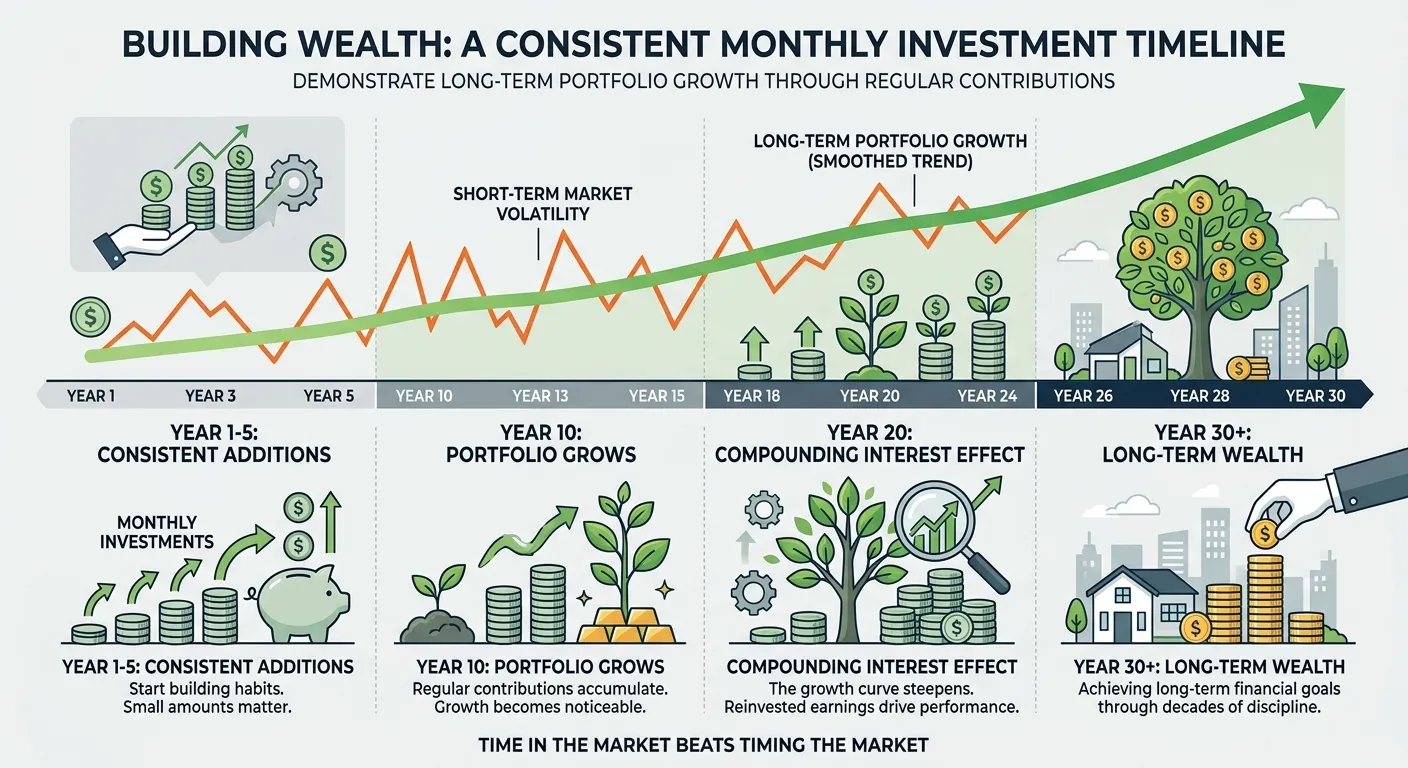
There are many ways to invest, but beginners should keep it simple.
1. Passive Investing (Recommended)
Invest in index funds or ETFs
Hold long-term
Minimal trading
Benefits:
Lower fees
Less stress
Proven long-term performance
2. Active Investing
Picking individual stocks
Timing the market
Downside:
Higher risk
Requires time and expertise
Key Insight
Most beginners perform better with passive investing strategies.
Step 6: Automate and Stay Consistent
Consistency beats timing.
Use Dollar-Cost Averaging
Invest a fixed amount regularly:
Monthly: $100 / €100
Weekly: smaller amounts
This helps:
Reduce impact of market volatility
Build discipline
Remove emotional decision-making
Example
Instead of investing $1,200 at once:
Invest $100 per month over a year
This is one of the easiest ways to build a long-term investing strategy.
Step 7: Understand Fees and Taxes
Ignoring fees can significantly reduce returns over time.
Common Fees
Expense ratios (for ETFs/funds)
Trading fees (less common now)
Platform fees
Example
A 1% annual fee vs. 0.1% can cost thousands over decades.
Taxes (General Overview)
US: Capital gains tax
UK: Capital Gains Tax (CGT)
EU countries: Varies by region
Tip: Use tax-advantaged accounts where available (e.g., retirement accounts).
Step 8: Avoid Common Beginner Mistakes
Many new investors lose money not because of the market—but because of behavior.
Mistakes to Avoid
Trying to time the market
Panic selling during downturns
Investing without a plan
Overconcentrating in one stock
Ignoring diversification
Real-World Insight
Markets across organisations have historically recovered from downturns. Long-term investors who stay invested tend to outperform those who exit early.
Step 9: Track, Learn, and Adjust
Investing is not “set and forget”—but it also shouldn’t be overmanaged.
What to Do Regularly
Review portfolio every 3–6 months
Rebalance if allocations drift
Continue learning about markets
What NOT to Do
Check prices daily
React to short-term news
Make emotional decisions
Building Your First Portfolio: A Simple Framework
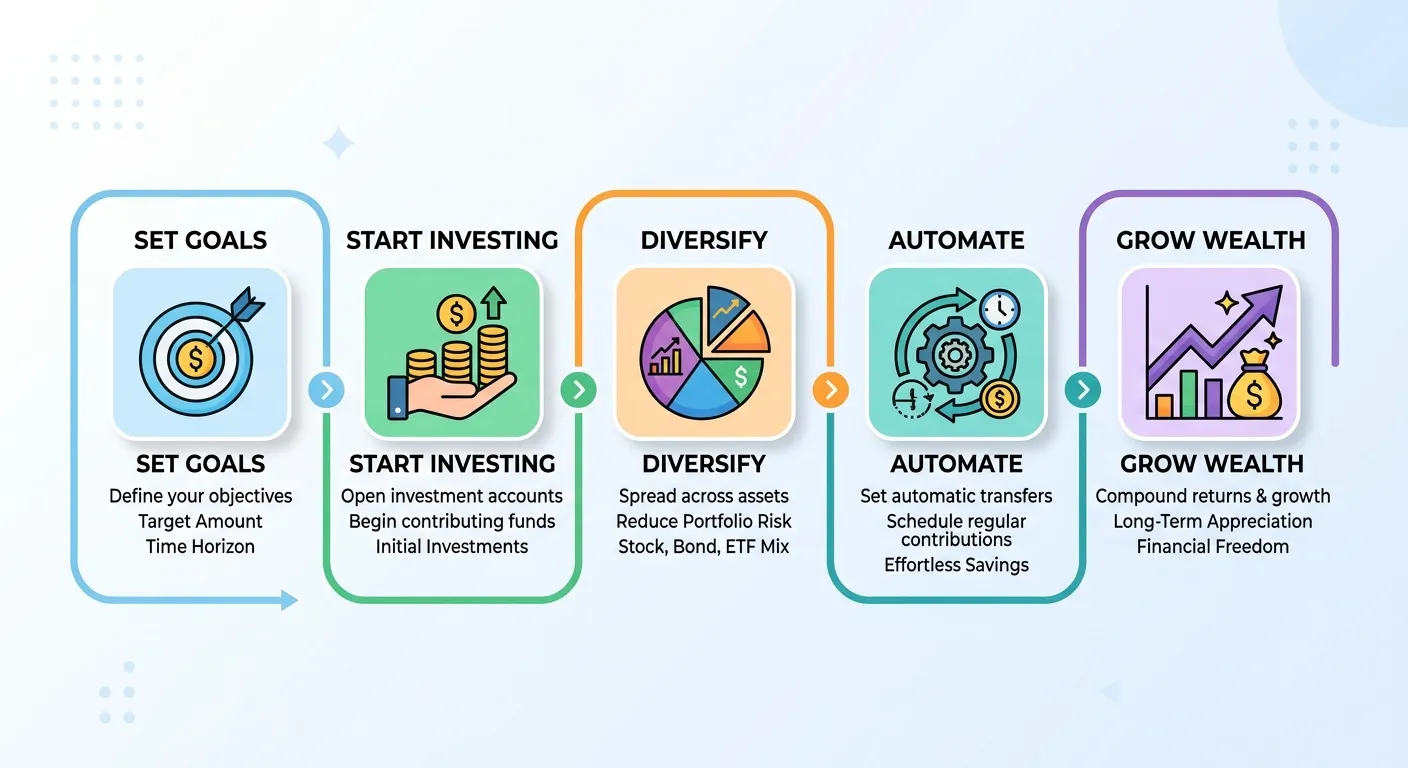
If you're starting today, follow this structure:
Define your goal (e.g., long-term wealth)
Start small ($50–$500)
Choose 1–3 ETFs
Automate monthly contributions
Diversify gradually
Stay invested long-term
Conclusion: Start Before You Feel Ready
The biggest mistake beginners make is waiting too long.
You don’t need perfect knowledge, large capital, or complex strategies. You just need to start—with a clear plan and consistent approach.
Key Takeaways
Investing is essential for long-term financial growth
Start small and scale gradually
Diversification reduces risk
Passive investing works for most beginners
Consistency matters more than timing
Action Step
Start today:
Open an investment account
Invest your first $50–$100 (or €50–€100)
Set up automatic monthly contributions
That single step can compound into significant wealth over time.
Disclaimer
This content is for educational purposes only and does not constitute financial advice. Always consider your financial situation and consult a qualified advisor if needed.