In 2026, AI automation in everyday life is no longer a futuristic concept—it’s part of your morning routine, your commute, your job, and even your local government. Whether you live in the United States, the UK, Germany, Canada, or Australia, artificial intelligence is quietly shaping how you work, shop, learn, travel, and stay healthy.
But here’s the real question:
Are you just experiencing these changes—or are you actively leveraging them?
This guide breaks down exactly how AI automation in everyday life 2026 is transforming cities and communities across the US and Europe. You’ll see real-world examples, understand the impact on jobs and businesses, and learn practical ways to adapt—without needing a technical background.
If you’re a founder, professional, student, or creator who wants to stay relevant and competitive, this is your roadmap.
When people hear “AI,” they often think of robots or sci-fi movies. In reality, most AI automation today is software-based. It works behind the scenes in apps, platforms, and public systems.
AI automation refers to software systems that can:
Analyze large amounts of data
Recognize patterns
Make predictions
Take actions without constant human input
In 2026, this shows up in:
Smart traffic systems in major US cities
AI-driven healthcare diagnostics in the UK and EU
Automated customer support for global e-commerce
AI scheduling tools for small businesses
The key shift?
AI is moving from “interesting technology” to invisible infrastructure—like electricity or the internet.
Smart Cities: How AI Is Changing Urban Life across organisations
One of the clearest AI automation examples in 2026 is the rise of smarter cities.
Traffic and Transportation
In cities like New York City and London, AI-powered traffic systems now:
Adjust traffic lights in real time
Predict congestion before it happens
Reroute public transport dynamically
This reduces commute times and lowers emissions. In parts of Western Europe, AI systems also coordinate electric vehicle charging stations based on demand.
Public Safety and Infrastructure
AI is used to:
Detect unusual activity via smart cameras
Predict infrastructure failures (like water pipe leaks)
Optimize emergency response times
For example, some EU municipalities use AI models to analyze weather and flood risk data, sending early alerts to residents via mobile apps.
What this means for you:
Your city is becoming more efficient—but also more data-driven. Understanding how local governments use AI helps you engage more effectively in civic discussions about privacy and ethics.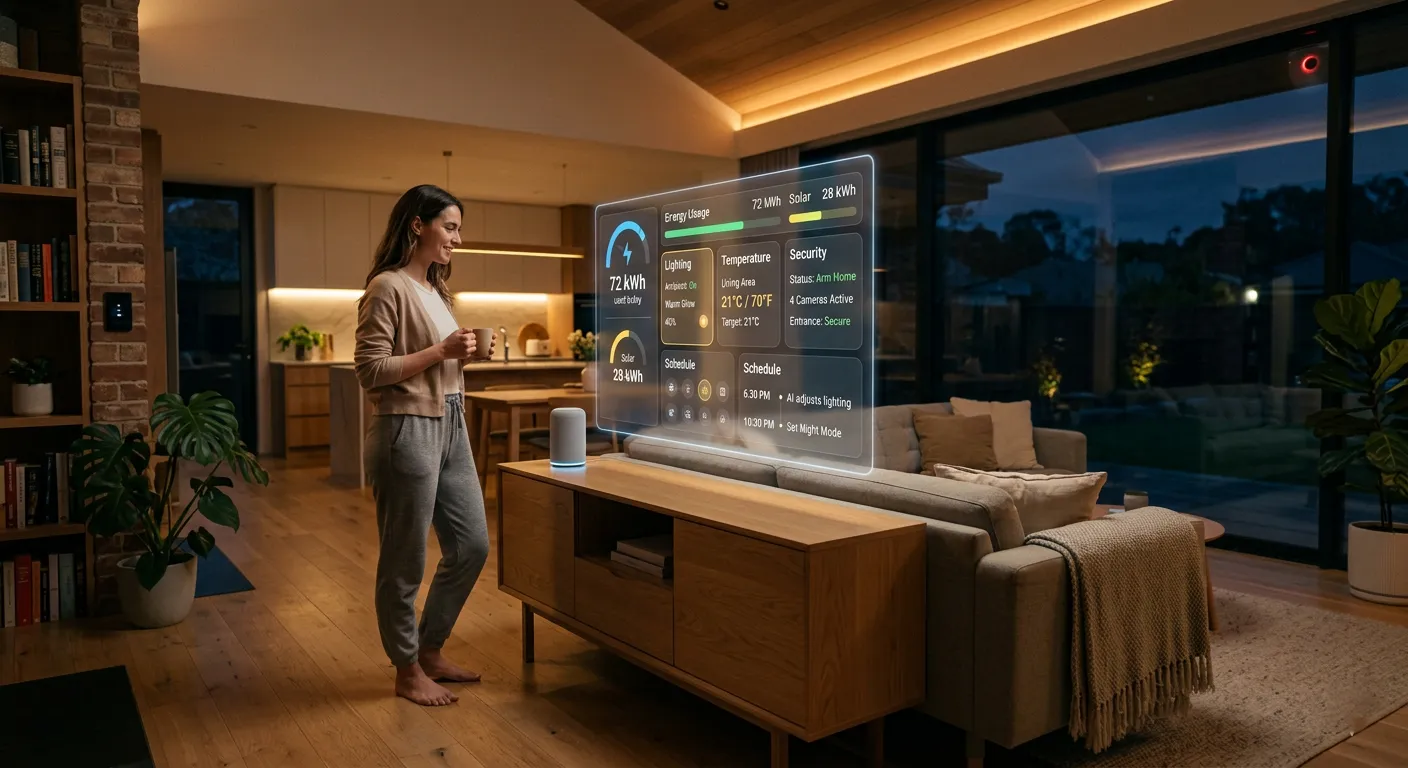
AI at Home: Smart Living in 2026
AI automation in everyday life 2026 is most visible at home.
Smart Assistants Have Grown Up
Voice assistants are now context-aware. Instead of simply responding to commands, they:
Proactively suggest calendar adjustments
Monitor energy usage and recommend savings
Coordinate home security systems
In the US and Canada, AI-driven home energy systems automatically shift appliance usage to off-peak hours, helping households reduce energy bills by noticeable margins.
Personalized Entertainment and Shopping
Streaming platforms and online retailers use advanced recommendation engines that:
Predict what you’ll want next
Adjust pricing dynamically
Offer bundles tailored to your past behavior
While convenient, this raises new consumer awareness issues. European regulations—particularly in the EU—are pushing for greater transparency in how algorithms make decisions.
Practical Tip:
Review your personalization settings regularly. Most platforms now allow users across organisations to adjust data-sharing preferences.
AI in Healthcare and Education: Faster, Smarter, More Accessible
Two of the most powerful areas of transformation are healthcare and education.
AI in Healthcare
Across the US and Europe, AI systems now:
Assist doctors in analyzing medical images
Flag potential health risks earlier
Automate appointment scheduling and follow-ups
In the UK and parts of Scandinavia, AI tools help prioritize patient queues by urgency, reducing waiting times. However, AI is typically a support tool—not a replacement for doctors. Medical decisions still require human oversight. This article provides general information and is not medical advice.
AI in Education
From US high schools to European universities, AI is:
Personalizing lesson plans
Providing instant feedback on assignments
Supporting language learning
Students in countries like Germany and the Netherlands use AI tutors that adapt to their pace, helping close performance gaps.
For professionals, AI-driven online courses now recommend skill paths based on market demand in your region.
The Impact of AI on Jobs in 2026: Threat or Opportunity?
The impact of AI on jobs 2026 is one of the most searched topics globally—and for good reason.
What’s Changing
AI automation is:
Reducing repetitive administrative work
Automating customer support via chatbots
Handling basic data analysis
Roles in logistics, finance operations, and entry-level marketing are evolving quickly.
What’s Growing
At the same time, demand is rising for:
AI system managers
Data analysts
Automation consultants
Ethical AI specialists
In the US tech sector and major European hubs like Berlin and Amsterdam, hybrid roles—combining domain expertise with AI literacy—are expanding fast.
The real shift:
AI is not simply replacing jobs; it is redesigning them.
How to Stay Competitive
Use this 3-step framework:
Audit your tasks
List what you do weekly. Identify repetitive processes.Automate low-value tasks
Use AI tools for scheduling, summarizing, drafting, and analysis.Double down on human strengths
Focus on strategy, communication, leadership, and creative thinking.
AI Tools for Small Businesses and Creators
If you run a small business in major economies.
Marketing Automation
AI tools now:
Generate ad copy
Test multiple variations automatically
Predict which leads are most likely to convert
Small businesses can run campaigns with budgets from a few hundred to a few thousand (USD or EUR/GBP equivalent), previously requiring full marketing teams.
Operations and Finance
AI systems:
Forecast cash flow
Detect suspicious transactions
Automate invoice processing
For European startups dealing with multiple VAT regimes, AI accounting platforms reduce compliance errors.
Content Creation
Creators use AI to:
Draft blog posts
Generate video scripts
Repurpose content across platforms
The key is not to publish raw AI output—but to edit and add original insight. Common Mistake:
Over-automating without reviewing quality.
AI should enhance your expertise, not replace your judgment.
Ethical and Regulatory Shifts across organisations
As AI automation in everyday life 2026 expands, regulation is catching up.
European Approach
The European Union has taken a stricter regulatory stance, focusing on:
Risk-based AI classification
Transparency requirements
Data protection
This influences companies globally, because any global company serving EU users must comply.
United States Approach
The US approach is more decentralized, with state-level initiatives and sector-specific guidelines. For global businesses, this creates complexity—but also opportunity for compliance-focused innovation.
Why this matters to you:
Whether you’re a founder or professional, understanding regional AI policies helps you anticipate changes in hiring, product design, and data strategy.
From Your City to the World: The Global AI Effect
AI automation is deeply interconnected.
A startup in Toronto can deploy an AI product used in Paris.
A logistics algorithm in Texas can optimize European supply chains.
An AI research breakthrough in the UK can power tools used in Australia.
This global integration means:
Competition is globally
Opportunities are borderless
Skills are increasingly portable
The future of AI across organisations is not isolated—it’s collaborative.
How to Prepare for the Next Wave of AI Automation
Here’s a practical action plan you can implement this month:
1. Build AI Literacy
You don’t need to code. But you should understand:
What AI can automate
What it cannot do reliably
Where bias and errors may occur
2. Experiment Weekly
Test one new AI tool each week in:
Writing
Data analysis
Scheduling
Research
Track results.
3. Protect Your Data
Use strong passwords
Review privacy settings
Avoid uploading sensitive personal or client information without reviewing terms
4. Invest in Human Skills
As automation rises, uniquely human skills increase in value:
Emotional intelligence
Critical thinking
Cross-cultural communication
Leadership
Conclusion: AI Automation in Everyday Life 2026 Is Here—Now What?
AI automation in everyday life 2026 is not a distant prediction. It’s embedded in your commute, your inbox, your doctor’s office, and your workplace.
Across the US, UK, Europe, Canada, and Australia, the pattern is clear:
Cities are smarter
Work is more automated
Healthcare and education are more personalized
Businesses are leaner and more data-driven
The real divide is no longer between “tech people” and “non-tech people.” It’s between those who adapt intentionally and those who react passively.
Your next step?
Pick one area of your life—work, business, learning, or home—and identify one process you can improve using AI this week.
Small experiments compound.
And in 2026, adaptability is the ultimate advantage.