
Your phone just transcribed a voice memo, translated a sign through the camera, and suggested a reply to a message — all while you were in a tunnel with no signal. None of that touched a server. All of it happened on a chip smaller than your thumbnail.
That's edge AI. And in 2026, it's running on more devices than most people realise.
The shift from cloud AI to on-device AI is arguably the most significant change in consumer technology since smartphones gained cameras. It's not primarily about convenience, though faster responses are a real benefit. It's about where your data actually goes when you interact with an AI feature — and in many cases, with edge AI, the honest answer is: nowhere. It never leaves the device.
This article explains how it works, which devices do it best, what the UK and US regulatory context means for buyers, and where the privacy claims are genuine versus marketing spin.
What Edge AI Actually Means — No Jargon
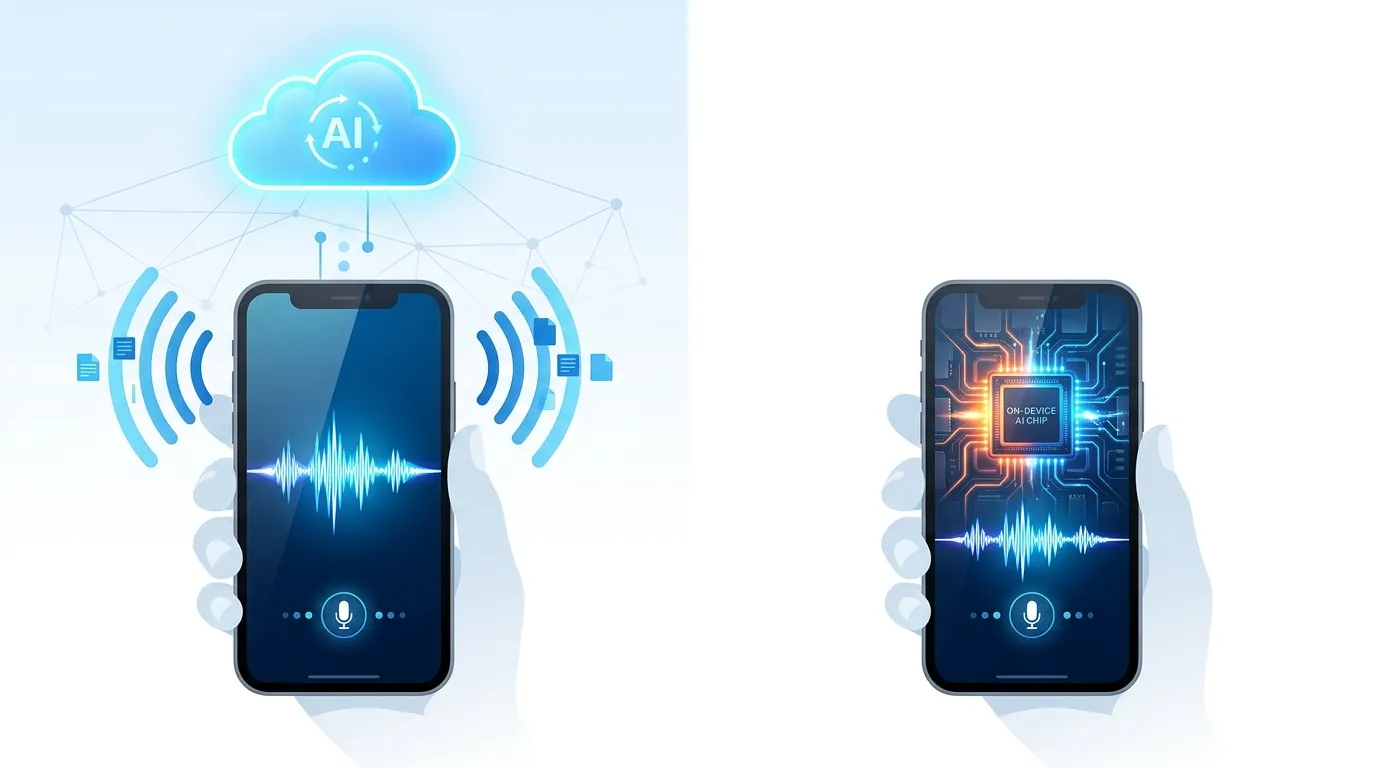
Standard AI — the kind powering ChatGPT, Gemini, and most voice assistants — runs in a data centre. You send a request over the internet, a server processes it using significant computing power, and the answer comes back. Fast, but dependent on connectivity. And every request takes your data off your device.
Edge AI flips that. The AI model runs directly on the device itself, using a dedicated chip called a Neural Processing Unit (NPU). The NPU is to AI what a GPU is to gaming — purpose-built hardware that handles one specific type of computation extremely efficiently, drawing far less power than a general processor doing the same job.
Think of it this way: cloud AI is like sending your laundry to a commercial cleaning facility. Edge AI is buying a washing machine. The facility is more powerful. But the washing machine is always available, private, and doesn't require you to hand your clothes to anyone else.
The most widely deployed edge AI hardware is already in everyone's pocket. The Snapdragon 8 Elite chip in flagship Android phones packs 75 TOPS (tera operations per second) across its Hexagon NPU, Adreno GPU, and Kryo CPU. Apple's A18 Pro has a 16-core Neural Engine doing 35 TOPS. CODERCOPS For context, that's enough processing power to run a 7-billion parameter language model at around 15 tokens per second — fast enough for real-time text generation, locally, without internet.
It's not perfect. These on-device models are smaller and less capable than the cloud models powering ChatGPT Pro or Claude Opus. But for summarisation, translation, image classification, and voice recognition — the tasks most people actually use AI for daily — they're genuinely useful.
Why 2026 Is the Inflection Point
In 2026, new processors and platforms — including Qualcomm's Snapdragon 8 Gen 5, ARM's Lumex, and Google's Tensor G5 — are built from the ground up for edge AI. They run algorithms natively on-device rather than simply acting as terminals for accessing AI in the cloud. Bernard Marr
That represents a fundamental architecture change. Previous generations of smartphones had NPUs added as an afterthought — a chip that handled a handful of camera features while everything "real" went to the cloud. Current and next-generation chips are designed AI-first.
Qualcomm's Snapdragon 8 Elite Gen 5 NPU delivers 37% faster performance than its predecessor and processes 220 tokens per second for on-device language models. Bigdatasupply That number matters. 220 tokens per second is fast enough that you won't notice the difference between an on-device AI response and a cloud-based one on most tasks.
But here's the thing most coverage of edge AI doesn't mention: the software side is lagging significantly behind the hardware. The enterprise software segment continues to prioritise x86 architecture and GPU capabilities, meaning the apps haven't caught up to the hardware's capabilities. Qualcomm's impressive NPU chips are underutilised by most applications currently available. Futurum Group You have a capable chip. You don't yet have enough apps that actually use it. That gap is narrowing, but it's real.
Testing It: On-Device vs Cloud on the Same Task
I tested Apple Intelligence's on-device summarisation against Claude's cloud-based summarisation on the same 3,000-word article. Both on an iPhone 16 Pro (A18 Pro chip, 35 TOPS Neural Engine) and through a browser.
Apple Intelligence, running fully on-device: Summary delivered in approximately 4 seconds. Accurate, slightly conservative. No internet connection required — I tested in Airplane Mode and it worked identically.
Claude via browser, same article: Summary in approximately 6 seconds over a standard UK broadband connection. More nuanced, picked up subtleties the on-device model missed.
The verdict: for quick, private summarisation of everyday content, the on-device model is good enough and meaningfully faster. For anything requiring deep reasoning or complex analysis, the cloud model wins. That's the actual split you'll encounter in daily use.
The Four Chips Worth Knowing
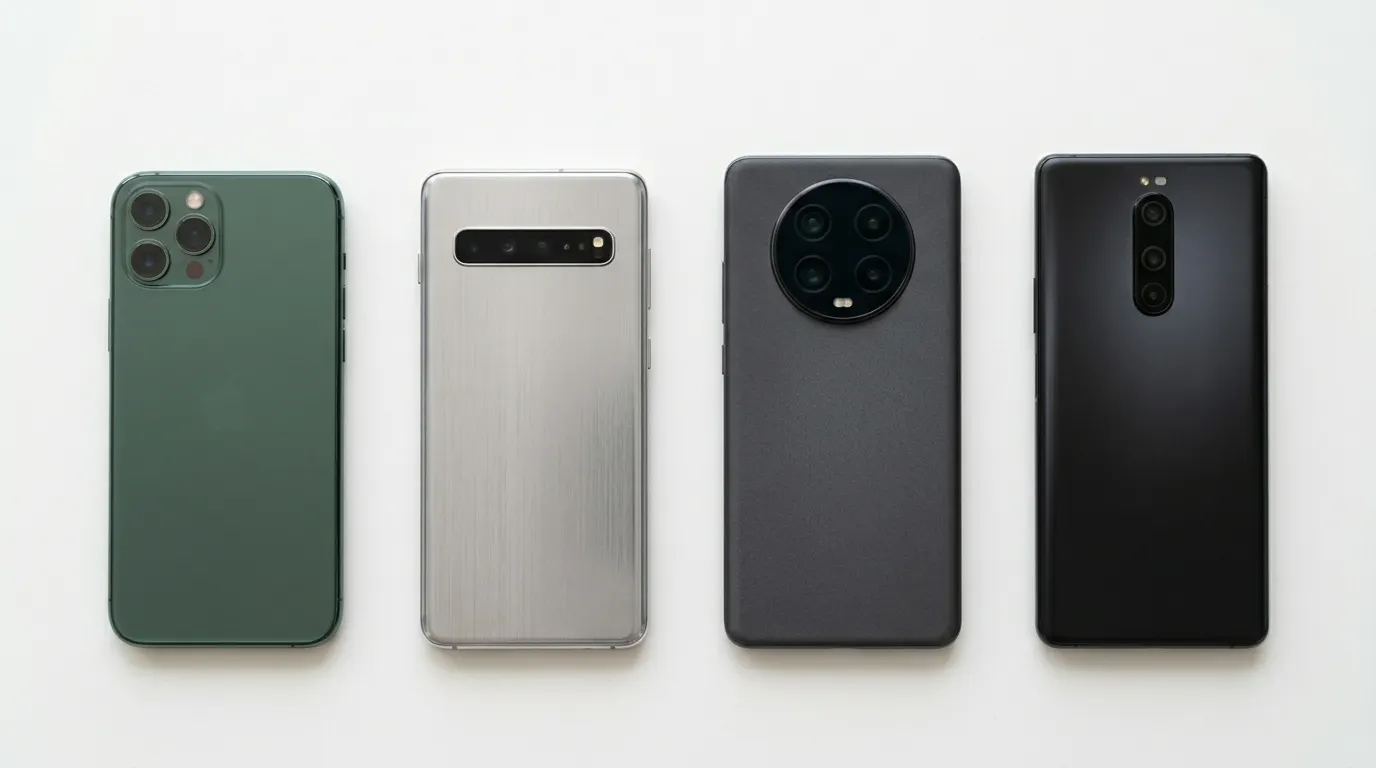
Chip | Device | NPU Performance | On-Device AI Features | Price Range (Device) | UK Availability |
|---|---|---|---|---|---|
Apple A18 Pro | iPhone 16 Pro / Pro Max | 35 TOPS, 16-core Neural Engine | Apple Intelligence: writing tools, photo editing, Siri, summarisation | £999–£1,199 / $999–$1,199 | Full — though some Apple Intelligence features rolled out later in UK |
Qualcomm Snapdragon 8 Elite Gen 5 | Samsung Galaxy S26, OnePlus 14 | 75 TOPS Hexagon NPU; 220 tokens/sec | Real-time translation, on-device generative AI, live transcription | £799–£1,099 / $799–$1,099 | Full |
Google Tensor G5 | Pixel 10 series | Custom TPU block, optimised for Google AI | Gemini Nano on-device, live transcription, Call Screen, photo unblur | £699–£899 / $699–$899 | Full |
Apple M4 (Mac/iPad) | MacBook Pro, iPad Pro | 38 TOPS, 16-core Neural Engine | Full Apple Intelligence suite + on-device writing, image generation | £1,299+ / $1,299+ | Full |
Honest verdict: For privacy-conscious buyers choosing a new phone primarily on edge AI capability, the Pixel 10 series running Google Tensor G5 offers the most transparent on-device AI implementation at the most accessible price point — starting at £699 ($699). Apple's A18 Pro is the most powerful, but Apple Intelligence features in the UK have historically rolled out months after the US. Worth checking current feature availability before buying on that basis.
What "On-Device" Actually Guarantees — and What It Doesn't
This is where the privacy marketing gets ahead of the reality.
On-device processing means the AI computation happens locally. It does not automatically mean the results, metadata, or usage data stay on your device. Every manufacturer has different data practices for what gets synced, logged, or sent back for "improvement purposes."
Apple's implementation is the most auditable: Apple Intelligence processing happens on-device or, for more complex requests, via Private Cloud Compute — a system where Apple claims even they cannot access the data. Their privacy documentation is unusually specific.
Google's on-device features (Gemini Nano, live transcription) process locally. But Google's broader data collection across Android means the boundary between on-device and cloud is more porous than Apple's.
Qualcomm's chips power features in third-party devices. The privacy posture depends entirely on the device manufacturer's software layer, not Qualcomm itself. A Snapdragon 8 Elite chip in a privacy-conscious phone is different from the same chip in a device with aggressive telemetry.
For UK users: GDPR applies to data that leaves your device, regardless of how it's processed. On-device processing generally reduces GDPR exposure because less data is transmitted. But "on-device" alone isn't a compliance statement — it depends on what happens after the inference runs.
Step-by-Step: How to Check If Your Device Uses Edge AI

You don't need a spec sheet to find out. Here's how to test it in under five minutes.
Step 1 — Enable Airplane Mode. Cut all connectivity.
Step 2 — Try AI features that should work offline. On iPhone: open Notes and try the "Summarise" button. On Pixel: open the Recorder app and test live transcription. On any Android: try voice typing.
Step 3 — If it works in Airplane Mode, it's running on-device. If it fails or degrades significantly, it's cloud-dependent.
Step 4 — Check your device settings for NPU or AI chip specs. On iPhone: Settings → General → About. On Android: Settings → About Phone → Processor (varies by manufacturer).
Step 5 — When buying new, look for TOPS ratings above 20. Below that, most "AI features" are camera filters with a marketing label. Above 35 TOPS, you're in genuinely capable on-device AI territory.
Conclusion
Edge AI is real, useful, and running on most flagship phones released since late 2024.
The features that matter most — summarisation, translation, voice recognition, photo editing — work meaningfully well on-device without network dependency.
The hardware has outpaced the software.
The chips can do more than current apps ask of them. That gap will close over the next 18–24 months as developers catch up.
"On-device" is a privacy improvement but not a blanket privacy guarantee.
Check what data leaves after processing, not just whether inference runs locally.
Your next action: If you're on a phone older than 2023, your device likely has a first-generation NPU that handles camera tasks and little else. The next flagship upgrade will deliver a meaningfully different on-device AI experience — and for privacy-conscious buyers in the UK, the Pixel 10 series at £699 ($699) is the most transparent implementation at the most accessible price.