
Getting your first customers is one of the hardest and most important steps in building a business. Before scaling, before ads, before automation—you need proof that real people are willing to pay.
If you’re trying to find your first 10 customers, you don’t need a huge marketing budget. What you need is clarity, direct outreach, and smart execution. Many successful startups in the United States and Europe got their first traction through manual, low-cost strategies—not paid ads.
This guide breaks down practical, proven methods to help you land your first 10 customers—even if you’re starting from zero.
Why the First 10 Customers Matter More Than 1,000
Before diving into tactics, understand this: your first 10 customers are not about revenue—they’re about validation. They help you:
Confirm real demand
Identify what actually sells (not what you assume)
Gather feedback to improve your product
Build early testimonials and case studies
In markets like the US or UK, where competition is high, early validation is often the difference between scaling successfully or burning through budget.
Key insight: If you can’t convince 10 people to buy manually, paid marketing won’t fix that problem.
Start With a Clear, Specific Customer Profile

Most founders fail here. They try to target “everyone,” which leads to weak messaging and poor results.
Define your first customer segment
Focus on a narrow group:
Job role (e.g., freelance designers, SaaS founders)
Industry (e.g., e-commerce, fintech, health tech)
Geography (e.g., US startups, UK agencies, EU freelancers)
Pain point (e.g., “struggling to generate leads”)
Example:
Instead of “small businesses,” target:
“E-commerce store owners in the US doing $5k–$20k/month struggling with abandoned carts.”
This level of clarity improves your conversion rate immediately.
Use Your Existing Network First (Even If It’s Small)
Your fastest path to your first 10 customers is people who already know you.
Where to look:
Friends and colleagues
Former coworkers or clients
LinkedIn connections
Online communities you’re already part of
How to approach:
Don’t pitch aggressively. Start conversations. Simple outreach framework:
Explain what you’re building
Ask for feedback
Offer to help solve a problem
Example message:
“Hey, I’m working on a tool that helps [specific problem]. I’m looking for a few people to test it and give feedback. Would you be open to trying it?”
In both across markets, this “soft ask” approach performs better than hard selling early on.
use Direct Outreach (Cold but Personal)

Cold outreach works—if it’s targeted and personalized.
Where to find potential customers:
LinkedIn (highly effective in US, UK, EU markets)
Twitter/X communities
Niche Slack or Discord groups
Industry directories
What makes outreach effective:
Personalization (mention something specific)
Clear value proposition
Low-friction ask
Example structure:
Personal hook
Problem recognition
Quick solution mention
Simple CTA
Example:
“Hi Sarah, I noticed your Shopify store has a strong product range. Many stores at your stage struggle with cart abandonment. I’ve built a simple solution that helps recover lost sales. Would you be open to a quick demo?”
Tip: Aim for 20–30 targeted messages per day. Even a 5–10% response rate can get you your first customers.
Offer a “Founding Customer” Deal
Early customers are taking a risk on you. Reward that.
What to offer:
Discounted lifetime pricing
Extended free trial
Extra support or customization
Example pricing approach:
Regular price: $50/month
Founding offer: $10–$20/month or €10–€15/month
Why this works:
Reduces risk for the customer
Creates urgency
Helps you close deals faster
In competitive markets like Western Europe, early incentives can significantly increase conversion rates.
Build in Public to Attract Inbound Interest
You don’t need ads if people come to you.
Platforms to use:
LinkedIn (strong in B2B across US/EU)
Twitter/X (startup and tech audiences)
Reddit (niche communities)
What to share:
Progress updates
Lessons learned
Failures and pivots
Customer wins
Example post:
“Day 14: Spoke to 12 users. 8 said they struggle with [problem]. Pivoting the product to focus on this.”
This builds trust and attracts early adopters organically.
Join Communities Where Your Customers Already Hang Out

Instead of trying to bring customers to you, go where they already are.
High-value channels:
Reddit threads
Facebook groups
Indie hacker communities
Industry-specific forums
Strategy:
Provide value first
Answer questions
Share insights
Softly introduce your solution
Avoid: Spamming links or direct selling—it damages credibility quickly. Example:
If someone asks, “How do I reduce churn?”
You can reply with actionable advice, then add:
“I’m actually building a tool around this—happy to share if you’re interested.”
Turn Conversations Into Customers (Validation Loop)
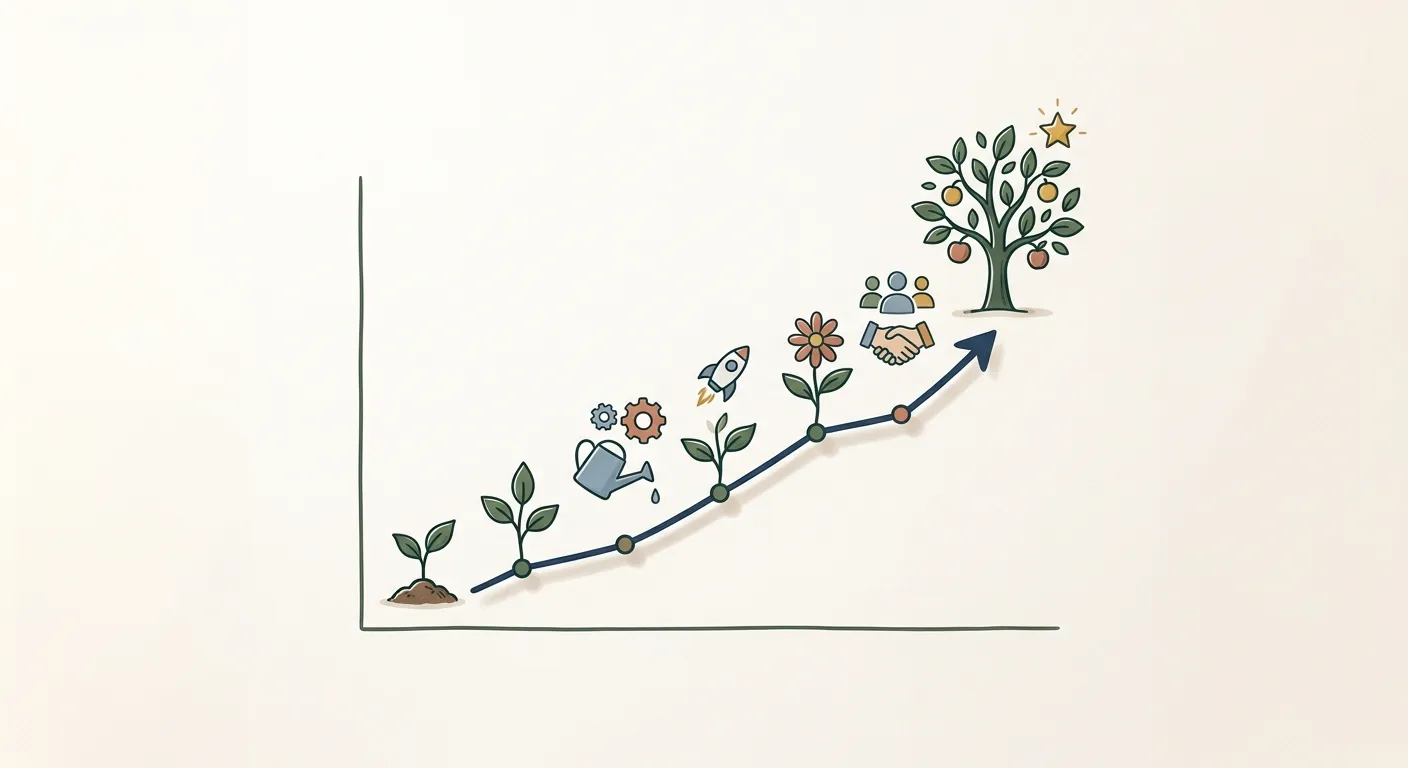
Your first 10 customers often come from conversations—not funnels.
Simple validation loop:
Talk to potential customers
Identify recurring problems
Offer a solution
Get commitment (even small payment)
Iterate based on feedback
Key metric:
Not traffic. Not clicks.
Actual willingness to pay. Even one paying customer is more valuable than 1,000 free users early on.
Create a Simple Landing Page That Converts
You don’t need a complex website—just a clear one.
Must-have elements:
Clear headline (problem + solution)
Short explanation
Social proof (if available)
Call-to-action (CTA)
Example CTA:
“Book a demo”
“Join early access”
“Get started free”
Tools:
Carrd
Notion pages
Basic Next.js landing page
Tip: Keep it simple. Early-stage users care more about value than design.
Common Mistakes to Avoid
1. Waiting for perfection
You don’t need a perfect product—just a working solution.
2. Relying only on ads
Paid ads without validation often waste money.
3. Targeting too broad an audience
Niche down to increase conversion.
4. Ignoring feedback
Your first customers are your best source of insight.
5. Overbuilding before selling
Sell first, then build based on demand.
A Simple 14-Day Action Plan
Days 1–3:
Define your target customer
Create a simple offer
Build a basic landing page
Days 4–7:
Reach out to 50–100 people
Start conversations
Collect feedback
Days 8–10:
Refine your message
Offer founding deals
Close first 3–5 customers
Days 11–14:
Continue outreach
Share progress publicly
Aim to reach 10 customers
Conclusion: Focus on Action, Not Budget
To find your first 10 customers, you don’t need a large marketing budget—you need focus, consistency, and direct engagement.
The most successful early-stage founders don’t wait for perfect conditions. They:
Talk to customers early
Sell before scaling
Iterate quickly
Key takeaway:
Your first 10 customers come from conversations, not campaigns.
Next Step:
Start today. Identify 20 potential customers and reach out. One message can lead to your first paying user.