
Most business owners spend their days putting out fires—missed deadlines, unhappy customers, declining sales, or team inefficiencies. The problem? These are symptoms, not causes.
Systems thinking for business owners shifts your perspective. Instead of reacting to problems, you identify the underlying structures that create them—and fix those permanently.
This article breaks down how to apply systems thinking in a practical, actionable way so you can stop firefighting and start building a resilient, scalable business.
At its core, systems thinking is the ability to see your business as a collection of interconnected parts rather than isolated issues.
Instead of asking:
“Why did this problem happen?”
You ask:
“What system allowed this problem to happen repeatedly?”
Key Principles of Systems Thinking
Interconnectedness: Every department, process, and decision affects others
Feedback loops: Actions create reactions that reinforce or weaken outcomes
Patterns over time: Trends matter more than one-time events
Root causes over symptoms: Fix the source, not the result
Simple Example
Symptom: Customer complaints are increasing
Typical reaction: Hire more support staff Systems thinking approach:
Is onboarding unclear?
Are product expectations mismatched?
Is there a recurring defect in delivery?
Fixing the system reduces complaints permanently—without increasing costs.
Why Business Owners Get Stuck Fixing Symptoms

Even experienced founders fall into reactive cycles. Here’s why:
1. Pressure for Immediate Results
Short-term demands (revenue, deadlines) push quick fixes over deep analysis.
2. Lack of Visibility
Many businesses lack clear data systems, making root causes harder to identify.
3. Organizational Silos
Marketing, sales, and operations often work independently, hiding system-wide issues.
4. Misaligned Incentives
Teams optimize for local performance, not overall system health.
The Cost of Ignoring Root Causes
Ignoring systems leads to compounding inefficiencies. Over time, this impacts:
Operational Efficiency
Rework and duplication increase costs
Teams spend more time fixing than building
Customer Experience
Inconsistent delivery damages trust
Negative reviews reduce acquisition efficiency
Financial Performance
Higher churn increases customer acquisition costs
Profit margins shrink due to inefficiencies
Example (US SaaS company):
A company spends $50–$150 per customer acquisition but loses 30% within the first month due to poor onboarding. Fixing onboarding (system) is far more effective than increasing ad spend (symptom).
Example (UK/EU eCommerce):
A retailer facing returns rates above 20% focused on stricter policies. A systems review revealed inaccurate product descriptions—fixing that reduced returns significantly without harming customer trust.
A Practical Framework for Systems Thinking
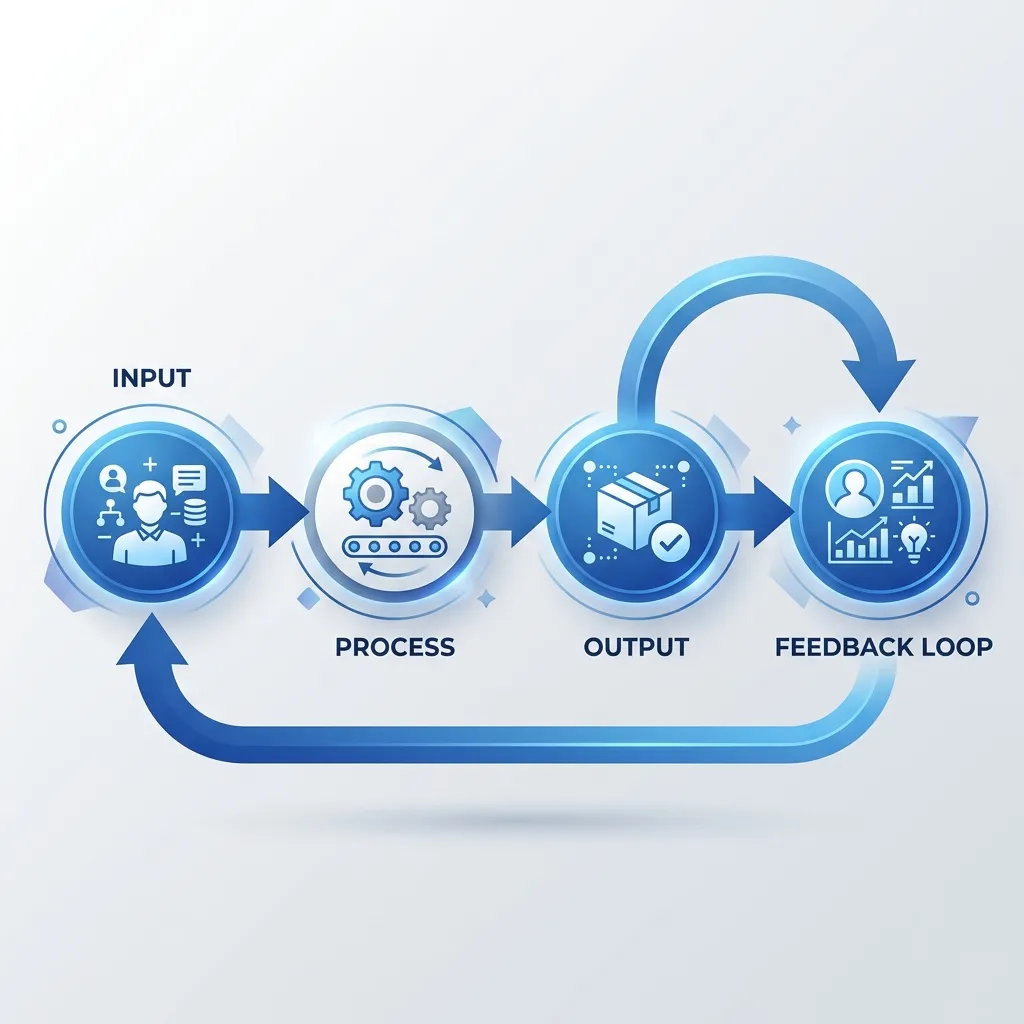
Use this simple 5-step framework to diagnose and fix root causes:
Step 1: Define the Problem Clearly
Avoid vague statements like:
“Sales are down”
Instead:
“Sales dropped 18% over 3 months in our UK market segment”
Step 2: Identify Patterns
Ask:
Is this recurring?
When did it start?
What changed?
Look at:
Weekly trends
Customer segments
Product lines
Step 3: Map the System
Create a simple flow: Input → Process → Output → Feedback Example:
Leads → Sales funnel → Customers → Retention feedback
Look for:
Bottlenecks
Delays
Misalignment
Step 4: Find Root Causes
Use techniques like:
5 Whys Method
Process breakdown analysis
Customer journey mapping
Example:
Why are customers leaving?
Why is onboarding confusing?
Why is messaging inconsistent?
Eventually, you uncover the real issue.
Step 5: Redesign the System
Instead of patching:
Improve inputs (better leads, clearer messaging)
Simplify processes
Add feedback loops
Key Systems Every Business Owner Should Optimize
Not all systems are equal. Focus on high-impact areas first:
1. Customer Acquisition System
Includes:
Marketing channels
Messaging
Lead qualification
Common issue: Low conversion rates
Root cause: Misaligned targeting or unclear value proposition
2. Sales System
Includes:
Funnel stages
Follow-up processes
Closing strategies
Common issue: Leads not converting
Root cause: Poor qualification or inconsistent sales process
3. Delivery/Operations System
Includes:
Product/service delivery
Fulfillment timelines
Quality control
Common issue: Delays or errors
Root cause: Lack of standardized processes
4. Customer Retention System
Includes:
Onboarding
Support
Engagement
Common issue: High churn
Root cause: Poor early experience or unmet expectations
5. Decision-Making System
Includes:
Data collection
Reporting
Leadership alignment
Common issue: Slow or poor decisions
Root cause: Incomplete or unclear data
Systems Thinking vs Traditional Problem Solving

Traditional ApproachSystems Thinking ApproachFixes immediate issueFixes underlying causeReactiveProactiveShort-term resultsLong-term stabilityIsolated decisionsHolistic perspective
Example:
Traditional: Increase ad budget to boost sales
Systems thinking: Improve conversion rate and retention first
Common Mistakes to Avoid
1. Jumping to Solutions Too Quickly
Always diagnose before acting.
2. Ignoring Data
Decisions based on assumptions often miss the real issue.
3. Overcomplicating Systems
Keep systems simple and scalable.
4. Fixing Only One Part
A change in one area affects others—consider the whole system.
5. Lack of Documentation
Without clear processes, systems degrade over time.
Practical Tips to Apply Systems Thinking Today
Start Small
Pick one recurring problem and analyze it deeply.
Use Visual Mapping
Draw your systems:
Funnels
Workflows
Customer journeys
Even simple diagrams improve clarity.
Track Key Metrics
Focus on:
Conversion rates
Retention rates
Cycle times
Build Feedback Loops
Examples:
Customer surveys
Team retrospectives
Performance dashboards
Standardize Processes
Document:
Step-by-step workflows
Decision criteria
Roles and responsibilities
Real-World Scenario: Applying Systems Thinking
Scenario: Declining Revenue
Surface problem: Monthly revenue drops Traditional fix:
Increase ads
Offer discounts
Systems thinking approach:
Analyze funnel:
Traffic stable
Conversion down
Investigate:
Website changes reduced clarity
Root cause:
Messaging misalignment
Solution:
Refine positioning
Improve landing pages
Result:
Higher conversion without increased spending
Building a Systems-Driven Business Culture

Systems thinking isn’t just a tool—it’s a mindset.
Encourage Team-Level Thinking
Train your team to ask:
“Why is this happening?”
“What system caused this?”
Align Incentives
Reward:
Process improvement
Long-term thinking
Cross-functional collaboration
Invest in Tools
Use tools for:
Process mapping
Data analytics
Workflow automation
Review Systems Regularly
Schedule:
Monthly system reviews
Quarterly process audits
Conclusion: From Firefighting to Strategic Growth
Most businesses don’t struggle because of a lack of effort—they struggle because of flawed systems. By applying systems thinking for business owners, you can:
Eliminate recurring problems
Improve efficiency
Scale sustainably
Key Takeaways
Symptoms are signals, not solutions
Systems create results—good or bad
Fixing root causes delivers long-term impact
Action Step
Choose one persistent issue in your business today.
Map the system behind it.
Identify the root cause—and fix that. That’s how you move from reactive to strategic growth.