
US inflation peaked at 9.1% in June 2022 — the highest in 40 years — quietly wiping out the purchasing power of $10,000 in savings by nearly $900 in a single year. That figure tends to land with a thud when people see it written down. No stock market crash. No bank run. The money just shrank. This is how inflation affects your money in 2026 and every year prior: not dramatically, but without pause.
"US inflation peaked at 9.1% in June 2022 — the highest in 40 years — wiping out nearly $900 in purchasing power from a $10,000 savings balance in a single year."
— US Bureau of Labor Statistics, CPI Data
Most people feel it in small doses. A grocery run that costs more than it should. A rent renewal that jumped again. Fuel that's crept up without any single moment you can point to. But those small doses compound. Between 2020 and 2025, cumulative US inflation ran at approximately 23% — meaning a $10,000 balance from 2020 had the real purchasing power of roughly $8,130 by 2025. The maths is simple. The consequences are not.
The good news: once you understand how currency devaluation works, there are practical steps available to most households — whether you hold USD, GBP, or another currency — that can stop the bleeding.
What inflation actually does to your money

Think of currency inflation as a slow leak in your wallet. You don't notice it day to day, but over a year, your money quietly buys less coffee, less fuel, less everything. That's not a metaphor for dramatic collapse — it's a description of exactly what's been happening to ordinary savers since 2021.
At its core, inflation measures how the purchasing power of a currency declines over time. When the Consumer Price Index (CPI) rises by 4%, a basket of goods that cost $100 last year costs $104 this year. Your balance hasn't changed. But it buys 4% less of the world.
That's where it gets complicated. Most standard savings accounts in the US paid between 0.01% and 0.5% APY during the 2020–2022 period. With CPI running at 4–9%, savers were effectively losing 4–8.5 percentage points in real purchasing power annually. The account statement looked fine. The real value was eroding fast.
Contrarian take
Here's what most personal finance advice gets wrong about inflation: it focuses almost entirely on investment returns, when the more urgent problem for most people earning under $60,000 (£47,000) is their savings rate. If you're losing 3–4% in real terms on your emergency fund every year, fixing that gap first delivers a guaranteed, risk-free return that most investment strategies can't match in the short term.
A real example: what this looks like for an actual person

Marcus, 38, Cincinnati, Ohio
Public school teacher — household income ~$54,000
$28,000
in checking/savings
0.4% APY
savings rate
−$840/yr
real purchasing power lost
Marcus had $28,000 sitting in a standard savings account earning 0.4% APY — about $112 in interest per year. With CPI averaging 3.5%, that balance was losing roughly $980 per year in real purchasing power. He was effectively paying $868 a year to keep his money "safe." Switching to a high-yield account at 4.5% APY — available from providers such as Ally or Marcus by Goldman Sachs — changed his annual interest income to approximately $1,260 and put his real return close to flat. That's a $1,148 annual improvement. For doing nothing more than opening a different account.
Honest caveat
High-yield savings accounts work well for most people — but if you have a variable income or irregular cash flow, the slightly higher minimums and transfer delays at some online banks can matter. Always check the fine print before switching your emergency fund.
A step-by-step framework: what to do today

Most people don't do this. They know inflation is a problem, acknowledge it briefly, and move on. Here is a five-step process you can work through in under an hour.
Calculate your real interest rate — right now
Subtract your savings account's APY from the current CPI inflation rate. If your account pays 0.5% and inflation runs at 3.5%, your real interest rate is −3.0%. You are losing purchasing power regardless of what your balance statement shows. Write that number down. It makes the rest of this process feel urgent.
Identify where inflation hits your budget hardest
Energy, food, and rent are historically the highest-inflation spending categories. According to the US Bureau of Labor Statistics, shelter costs rose 8.2% in 2023 alone. If those three categories dominate your monthly outgoings, you're facing above-average inflation exposure — and a standard savings rate fix won't fully compensate.
Move idle cash above the inflation line
Some investors consider high-yield savings accounts, money market accounts, or short-term Treasuries because these instruments have historically kept pace with — or exceeded — the base inflation rate during moderate-inflation periods. As of early 2026, competitive high-yield savings accounts in the US have been offering between 4.0–4.75% APY, depending on the rate environment.
Explore inflation-protected instruments for larger sums
In the US, Treasury Inflation-Protected Securities (TIPS) and Series I Bonds adjust their principal or rate in line with CPI. In the UK, NS&I index-linked savings certificates serve the same function. These are not high-return instruments. They are purchasing power preservation tools — and that's exactly the job they're designed to do.
Apply dollar-cost averaging to longer-term savings
Rather than parking all surplus income in cash, some investors spread contributions into diversified index funds using dollar-cost averaging — a fixed amount invested monthly regardless of market conditions. Historically, this approach has tended to outpace inflation over 10-year-plus periods. Past performance doesn't guarantee future results, but the long-run data on this approach is hard to argue with.
Standard savings vs. inflation-protected: a 5-year comparison
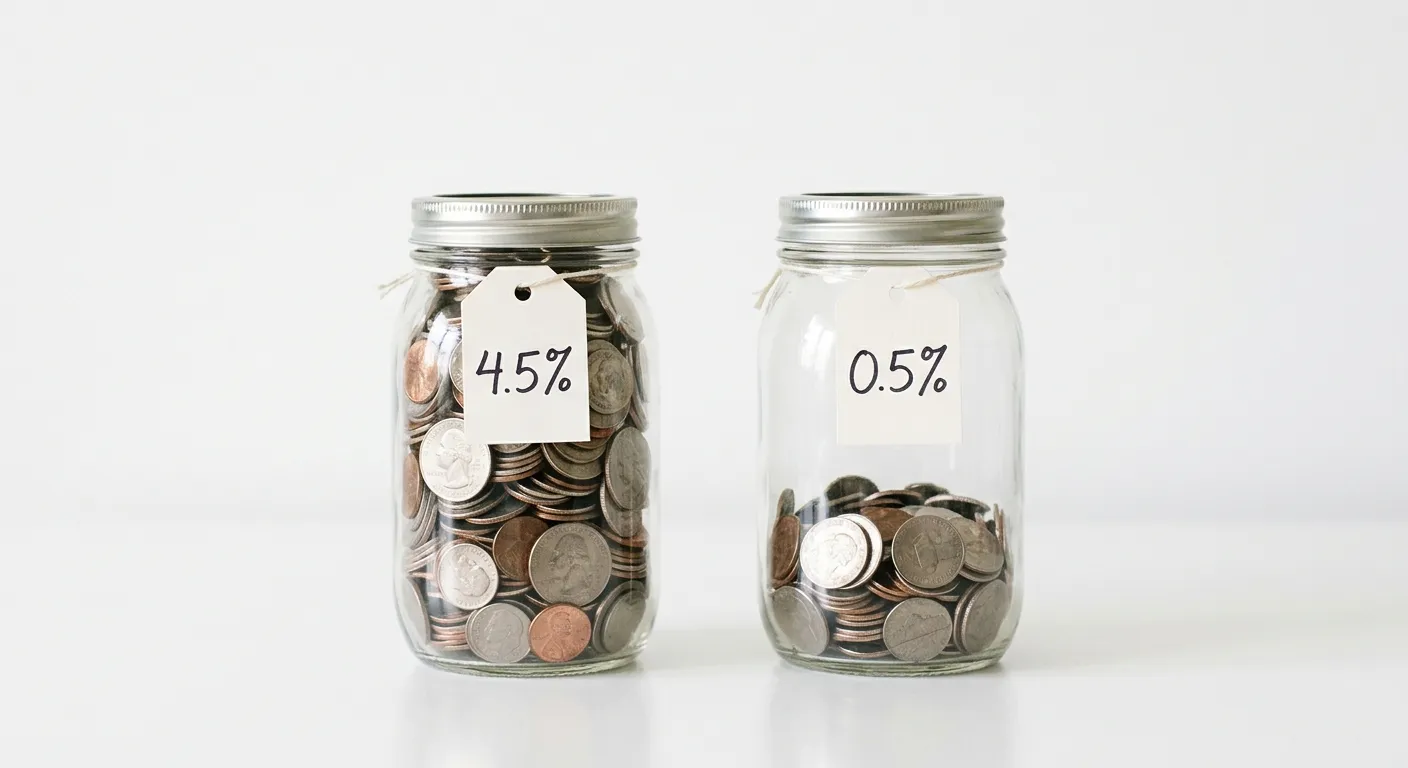
Here's what the data shows when you run the numbers side by side. The figures below use $50,000 / £50,000 as a starting balance and assume the listed rates across a five-year period.
Account type | Rate / yield | Balance after 5 yrs (nominal) | Real value (inflation-adjusted) | Verdict |
|---|---|---|---|---|
Standard savings (US) | 0.5% APY | $51,265 | ~$44,300 at 3.5% avg. CPI | ~$5,700 real loss |
High-yield savings (US) | ~4.5% APY* | $62,016 | ~$53,600 at 3.5% avg. CPI | Modest real gain |
US TIPS (5-year) | CPI + ~1.9%* | Adjusts with inflation | Principal protected in real terms | Inflation-proof principal |
US I-Bonds | CPI-linked (variable)* | Tracks inflation | Tracks CPI + fixed rate | Strong short-term hedge |
Standard UK Cash ISA | 1.5% AER typical | £53,864 | ~£40,600 at 6.7% peak inflation | Significant real loss |
UK Cash ISA (competitive) | 4.5% AER | £62,016 | ~£47,100 at 6.7% avg. | Partially offsets loss |
NS&I Index-Linked Certificates (UK) | RPI-linked | Adjusts with RPI | Real value preserved | Best UK inflation hedge |
*Rates approximate as of early 2026. Figures are illustrative, not guaranteed. Sources: US Treasury, NS&I, FDIC.
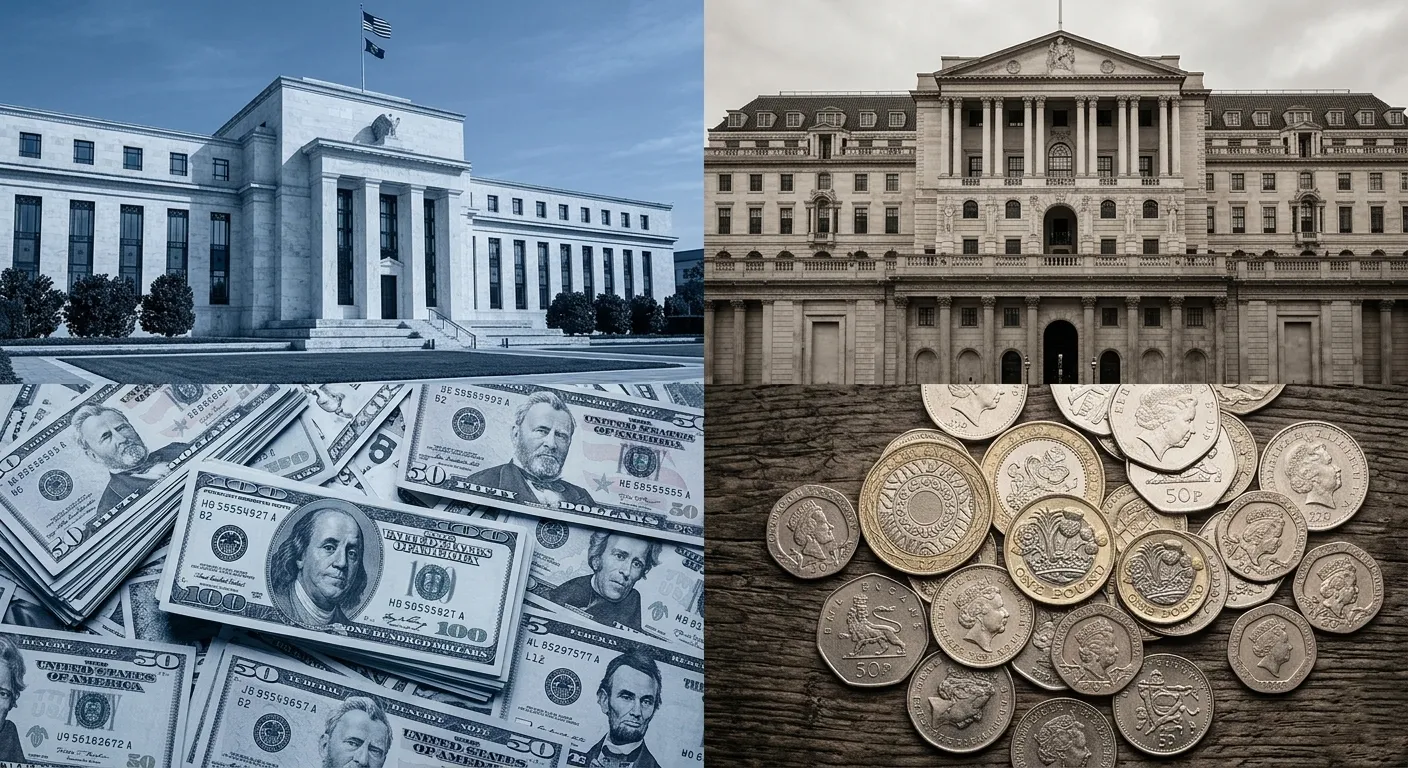
Real examples: US and UK households losing ground
US
United States — the 0.5% APY trap
−$8,400A US household with $50,000 in a standard savings account earning 0.5% APY, during a period when CPI averaged 3.5%, lost approximately $8,400 in real purchasing power over five years. The nominal balance grew to $51,265 — but at 3.5% inflation compounded, that sum's real purchasing power was closer to $44,300. A 401(k) or Roth IRA invested in diversified index funds would historically have produced materially different outcomes, though market risk applies.
UK
United Kingdom — the ISA inflation gap
−£14,400
In 2023, UK CPI peaked at 6.7% according to the Office for National Statistics. A UK saver with £50,000 in a standard Cash ISA earning 1.5% AER lost approximately £14,400 in real purchasing power over two years of elevated inflation. By contrast, a competitive Cash ISA at 4.5% AER narrowed that gap considerably. NS&I index-linked products, when available, remain the most direct UK inflation hedge outside of real assets.
Sources: Bank of England inflation tracker; ONS UK CPI data; US Bureau of Labor Statistics.
Five mistakes that accelerate your losses
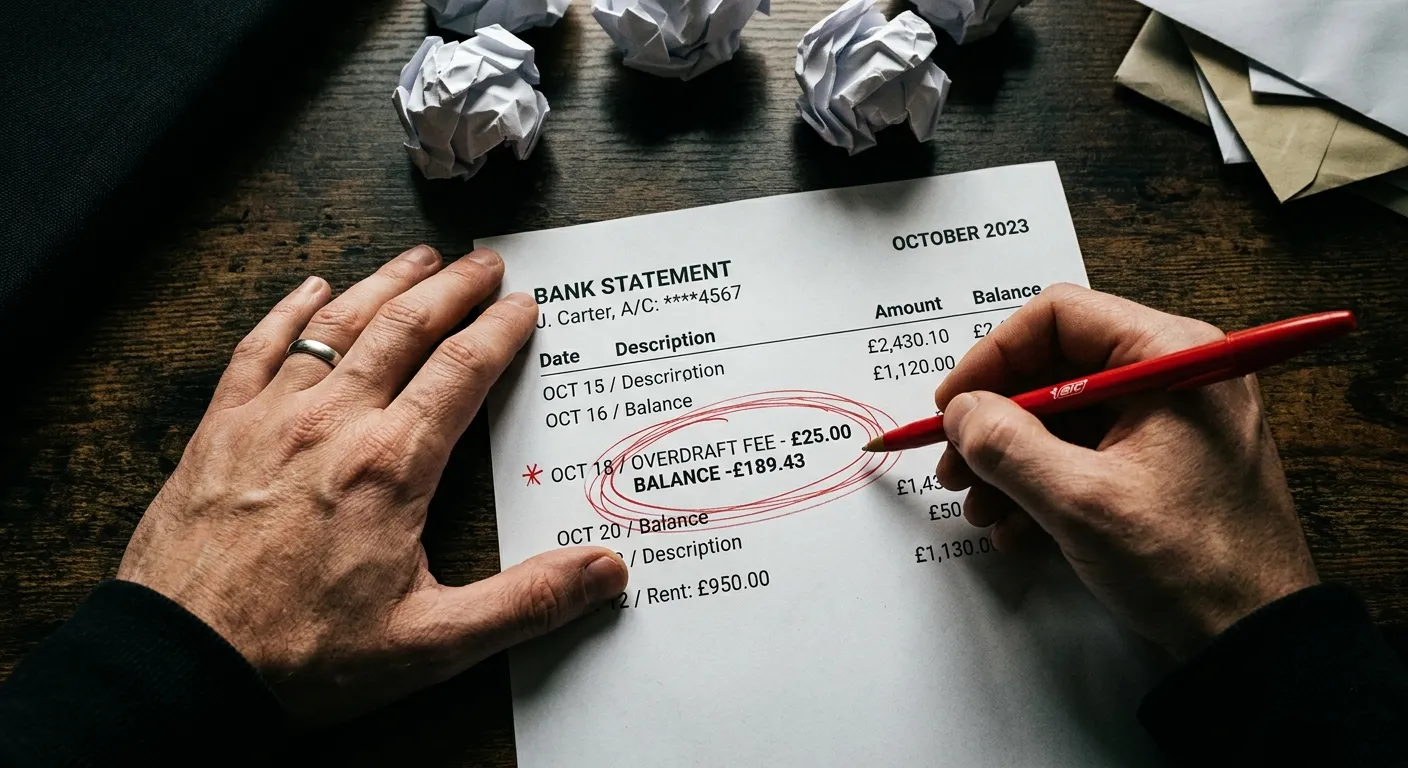
The result? Most people lose more to inflation than they realise — and a handful of very common habits make it worse.
Leaving large sums in a current or checking account. Standard current accounts in both the US and UK typically pay between 0% and 0.1% interest. According to a 2024 Bankrate survey, 22% of Americans earning over $100,000 still kept their primary savings in a standard checking account. Every dollar sitting above your liquidity needs in that account is losing real value faster than it would in even a basic high-yield alternative.
Confusing a nominal gain with a real one. If your savings account grew from £10,000 to £10,450 in a year (4.5% AER) while inflation ran at 4.0%, your real gain was approximately £45 — not £450. That's the real cost of waiting to understand this distinction. Conflating nominal and real returns creates a false sense of security that compounds year after year.
Failing to review your rate once a year. Banks cut savings rates quickly after central bank rate cycles turn downward. A rate that was competitive twelve months ago may now sit a full percentage point below inflation. Reviewing and switching takes fewer than 20 minutes and costs nothing. Most people don't do this.
Assuming inflation is resolved once the headline figure falls. Central bank policy can bring headline CPI down — but core inflation, which strips out volatile food and energy, tends to stay elevated for longer. In the UK, core inflation remained above 5% well into late 2023 even as the headline figure declined. Planning for continued pressure is more prudent than declaring it over.
Holding 100% of net worth in cash during stagflation. While cash preserves liquidity, holding everything in low-yield cash during prolonged stagflation — where inflation persists alongside low growth — has historically been one of the least effective strategies for preserving real wealth. Some investors consider a balanced approach: sufficient cash for three to six months of expenses, with the remainder in inflation-sensitive assets.
Three takeaways — and what to do next
Key takeaways
Inflation is not just an economic statistic — it is a direct, measurable reduction in what your money buys. A 3.5% inflation rate removes the equivalent of 3.5 cents from every dollar sitting in a low-interest account, every year, compounded. That's not dramatic. It's relentless.
The gap between your savings rate and the inflation rate — your real interest rate — is the single most important number for any cash saver to track. If it's negative, you are losing purchasing power regardless of what your balance statement says. Check it today.
Inflation-protected instruments — TIPS, I-Bonds in the US, NS&I index-linked certificates in the UK — exist precisely for this purpose. They are not high-return products. They are wealth preservation tools. Used alongside a sensibly diversified longer-term portfolio, they address the specific risk of currency devaluation eroding your savings.
The specific action to take now: Check your current savings account rate. As of early 2026, competitive high-yield savings accounts in the US — available from institutions such as Marcus by Goldman Sachs and Ally Bank — have typically offered between 4.0–4.75% APY, depending on the rate environment. In the UK, the best easy-access Cash ISA rates have been available above 4.0% AER from several high-street and challenger banks. If your current rate is more than 1.5 percentage points below those benchmarks, switching takes fewer than 20 minutes. That could save you $1,100–$2,800 (£850–£2,200) in purchasing power per year on a $50,000 balance.
The longer central banks adjust rates in response to shifting inflation dynamics, the shorter the window where these rates hold. Acting now, when competitive rates are still available, matters more than acting later when they may not be.