Cities globally face growing pressure to deliver better public services while managing limited budgets, increasing populations, and complex infrastructure challenges. From traffic congestion to waste management and public safety, local governments must respond faster and more efficiently than ever before.
This is where AI in local government is starting to play a significant role.
Artificial intelligence and automation are helping cities analyze massive amounts of data, predict problems before they occur, and deliver smarter services to residents. Across the United States, the United Kingdom, Europe, Canada, and Australia, municipalities are experimenting with AI-powered tools to improve transportation systems, optimize energy usage, enhance emergency services, and simplify administrative work.
we’ll explore how cities are using AI and automation to improve public services, real-world examples from different regions, the benefits and risks of government automation, and what the future of smart city governance may look like.
The Rise of AI in Local Government
Local governments manage a huge range of services:
Transportation
Public safety
Waste collection
Infrastructure maintenance
Housing and urban planning
Licensing and permits
Traditionally, many of these services rely on manual processes and reactive decision-making. Problems are often addressed only after citizens report them.
With the growth of smart cities technology, municipalities can now collect and analyze real-time data from:
Sensors
Cameras
Traffic systems
Mobile apps
Public records
Environmental monitoring tools
AI systems can process this data much faster than humans, helping city officials predict trends, automate routine tasks, and make better decisions.
According to several international studies, cities implementing digital transformation initiatives can reduce operational costs by 10–30% while improving service efficiency.
This shift is driving the rapid adoption of government automation and AI-powered municipal systems.
Smart Traffic Management and Transportation Systems
Traffic congestion costs cities billions in lost productivity each year. In large metropolitan areas such as New York, London, and Paris, commuters can lose dozens of hours annually sitting in traffic.
AI-powered traffic systems are helping cities tackle this issue.
How AI Improves Traffic Flow
AI systems analyze real-time data from:
Road sensors
GPS signals
Public transportation systems
Cameras and traffic lights
Using this information, algorithms can adjust traffic signals dynamically based on real-time conditions. Benefits include:
Reduced congestion
Faster emergency response times
Lower fuel consumption
Reduced air pollution
Example: Smart Traffic in Europe
Cities in Western Europe, including Barcelona and Amsterdam, have adopted AI-powered traffic management systems that automatically optimize traffic signals.
These systems can:
Detect traffic patterns
Prioritize buses and trams
Adjust lights during rush hour
Redirect traffic after accidents
In some cases, cities have reported traffic reductions of 15–25% after implementing intelligent traffic systems.
AI for Waste Management and City Maintenance
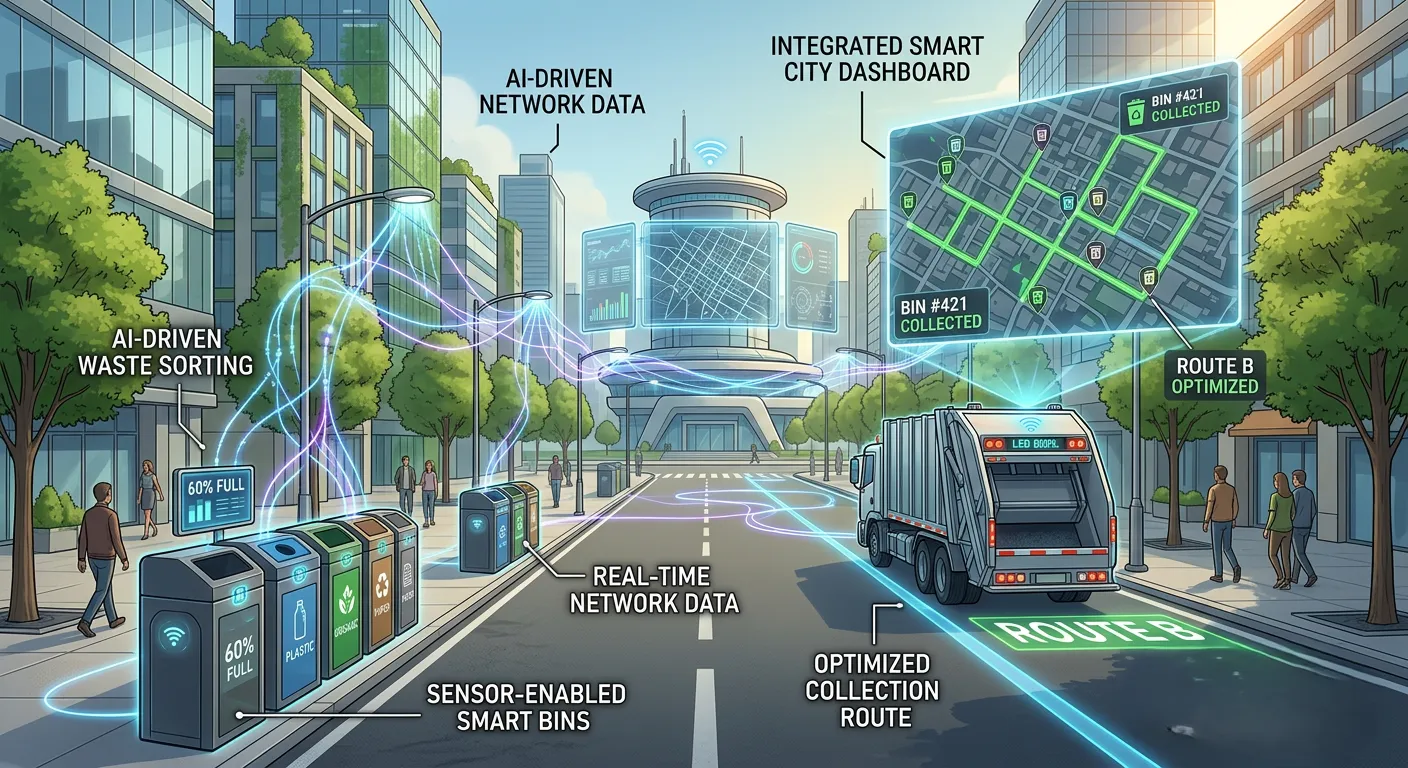
Waste collection is one of the largest operational costs for municipalities. Traditional collection routes often operate on fixed schedules regardless of how full bins actually are.
AI-powered waste systems are changing this.
Smart Waste Collection
Cities are installing sensor-equipped trash bins that monitor fill levels. AI software analyzes this data to create optimized collection routes.
This means trucks only visit bins when necessary. Benefits include:
Reduced fuel costs
Fewer collection trips
Lower emissions
Cleaner streets
Example: North American Cities
Several cities in the United States and Canada have implemented AI-driven waste management platforms that optimize routes in real time.
Some municipalities report operational cost savings of 20–40% after switching to smart waste systems. This is a clear example of AI for public services improving efficiency without increasing taxes or service fees.
Improving Public Safety with AI
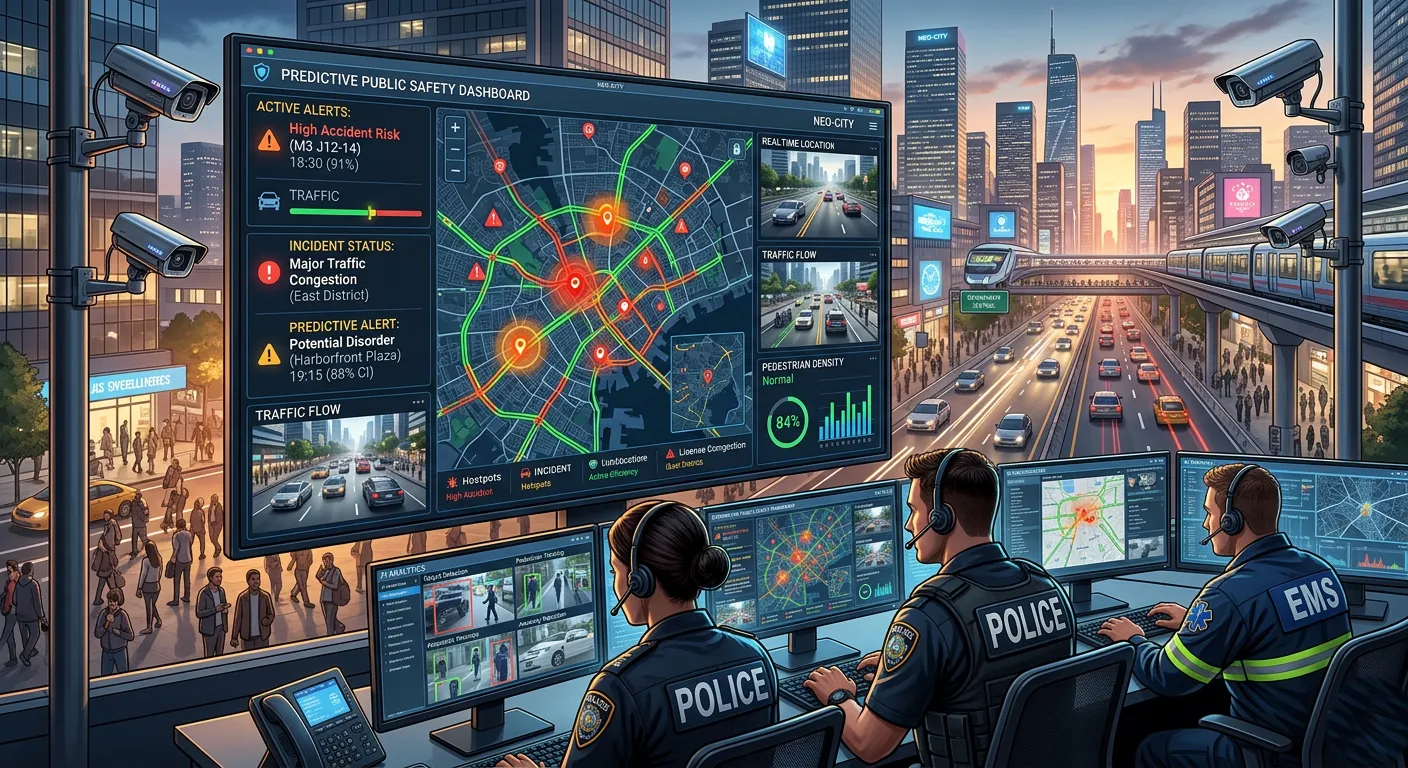
Public safety is one of the most important responsibilities of local governments. AI tools can help cities respond to emergencies faster and allocate resources more effectively.
AI Applications in Public Safety
Cities are using AI to:
Analyze crime patterns
Improve emergency response times
Detect dangerous situations in public areas
Monitor traffic accidents
For example, AI systems can analyze historical crime data to identify high-risk locations and times. Police departments can then allocate officers more strategically.
Important Ethical Considerations
While AI can improve safety, cities must balance innovation with privacy and civil liberties. Key concerns include:
Data privacy
Surveillance risks
Algorithmic bias
Many European cities operate under strict data regulations such as the General Data Protection Regulation (GDPR), which limits how AI systems can use personal data.
Responsible deployment of AI in city management requires transparency, oversight, and public trust.
AI-Powered Citizen Services and Digital Government
Residents expect government services to be as simple and fast as modern digital platforms. AI is helping cities deliver better digital government experiences.
Chatbots and Virtual Assistants
Many municipalities now use AI-powered chatbots to help residents:
Report potholes
Pay bills
Apply for permits
Request information
These systems are available 24/7, reducing wait times and freeing staff to focus on more complex cases.
Example: UK Local Councils
Several UK local councils have introduced AI chatbots on their websites to handle routine inquiries. This has helped reduce call center workloads and improve response times for residents. For example:
Simple queries can be answered instantly
Staff can focus on complicated service requests
Citizens receive faster support
This is a major step toward digital government transformation.
Urban Planning and Infrastructure Development

City planning involves analyzing vast datasets about population growth, housing demand, transportation networks, and environmental conditions.
AI tools help planners make data-driven decisions.
AI for Urban Planning
Urban planners can use AI models to:
Predict population growth
Identify housing shortages
Plan public transit expansion
Analyze environmental impact
AI simulations allow cities to test different planning scenarios before making expensive infrastructure investments.
Example: Smart Planning in the United States
Some U.S. cities are experimenting with AI-based digital twins—virtual models of the city. These simulations allow planners to evaluate:
Traffic changes from new roads
Housing developments
Flood risks
Energy consumption
Using AI for urban planning helps cities reduce costly mistakes and plan long-term growth more effectively.
Budget Efficiency and Cost Savings
Local governments operate under tight budget constraints. Every improvement must balance service quality with financial responsibility.
One major advantage of government automation is cost efficiency. AI systems can reduce costs by:
Automating repetitive administrative work
Optimizing resource allocation
Reducing maintenance delays
Preventing infrastructure failures
For example, predictive maintenance systems can analyze sensor data from bridges, water pipes, or public transit. Instead of repairing infrastructure after failure, cities can fix issues before they become expensive emergencies.
Financial Impact
Some smart city projects require upfront investment, typically ranging from $1 million to $10 million (or €900,000 to €9 million) depending on the scale.
However, long-term savings can significantly exceed those costs through improved efficiency and reduced operational expenses.
Challenges and Risks of AI in Local Government

Despite its potential, adopting AI in local government is not without challenges. Cities must carefully navigate several risks.
1. Data Privacy Concerns
Government systems often contain sensitive citizen data. Poor data management can create security risks. Cities must ensure:
Strong cybersecurity practices
Clear data governance policies
Compliance with privacy regulations
2. Algorithmic Bias
AI systems trained on biased data may produce unfair outcomes. For example:
Unequal policing recommendations
Biased service allocation
Discriminatory housing models
Cities must audit algorithms regularly to ensure fairness.
3. Skills and Workforce Challenges
Local governments may lack staff with AI expertise. Successful implementation requires:
Data scientists
technology specialists
cross-department collaboration
Many municipalities partner with universities, startups, or technology companies to bridge this gap.
A Practical Framework for Cities Starting with AI
Cities that want to adopt AI should start strategically rather than implementing technology everywhere at once. A simple framework includes:
Step 1: Identify High-Impact Problems
Focus on services where automation can make the biggest difference, such as:
Traffic management
Waste collection
permit processing
Step 2: Start with Pilot Projects
Small pilot programs allow cities to test AI systems without large financial risk.
Step 3: Ensure Transparency
Residents should understand how AI systems affect public services. Clear communication builds trust.
Step 4: Measure Outcomes
Track key performance indicators such as:
Service response times
operational costs
citizen satisfaction
Step 5: Scale Successful Solutions
Once pilots prove successful, cities can expand AI tools across departments.
The Future of AI-Powered Cities
Over the next decade, AI for public services is expected to expand significantly. Future smart cities may include:
Fully autonomous public transport systems
AI-managed energy grids
Predictive healthcare services
Real-time environmental monitoring
AI-assisted disaster response
Rather than replacing public servants, AI will likely act as a decision-support system, helping governments serve citizens more effectively.
Cities that embrace responsible AI adoption today may become global leaders in efficient, sustainable urban governance.
Conclusion: Smarter Cities Through Responsible AI
The rise of AI in local government marks a major shift in how cities operate. From smarter traffic systems to automated citizen services, AI is enabling municipalities to:
Improve efficiency
reduce operational costs
deliver faster public services
make better long-term decisions
However, success depends on responsible implementation. Cities must balance innovation with transparency, privacy protections, and fairness.
For residents, the benefits could be significant: safer streets, faster services, cleaner environments, and better urban planning.
For policymakers and city leaders, the next step is clear: start small, test solutions carefully, and scale the technologies that genuinely improve public life.