Many founders avoid financial statements because they seem complicated, technical, and designed for accountants. But the truth is simple: if you run a business, financial statements are your dashboard.
You don’t need to become a certified accountant to understand them. What you need is the ability to read financial statements like a founder—someone focused on growth, risk, and smart decisions.
Learning how to read financial statements helps you answer critical questions:
Is the company actually profitable?
Where is the money going?
Can we afford to hire more people?
Are we at risk of running out of cash?
In the United States, the UK, and across Europe, investors and lenders expect founders to understand their numbers. Whether you're running a startup in California, a SaaS company in London, or an e-commerce brand in Berlin, financial literacy is a competitive advantage.
This guide breaks down financial statements in simple language, with practical frameworks founders use to interpret them quickly.
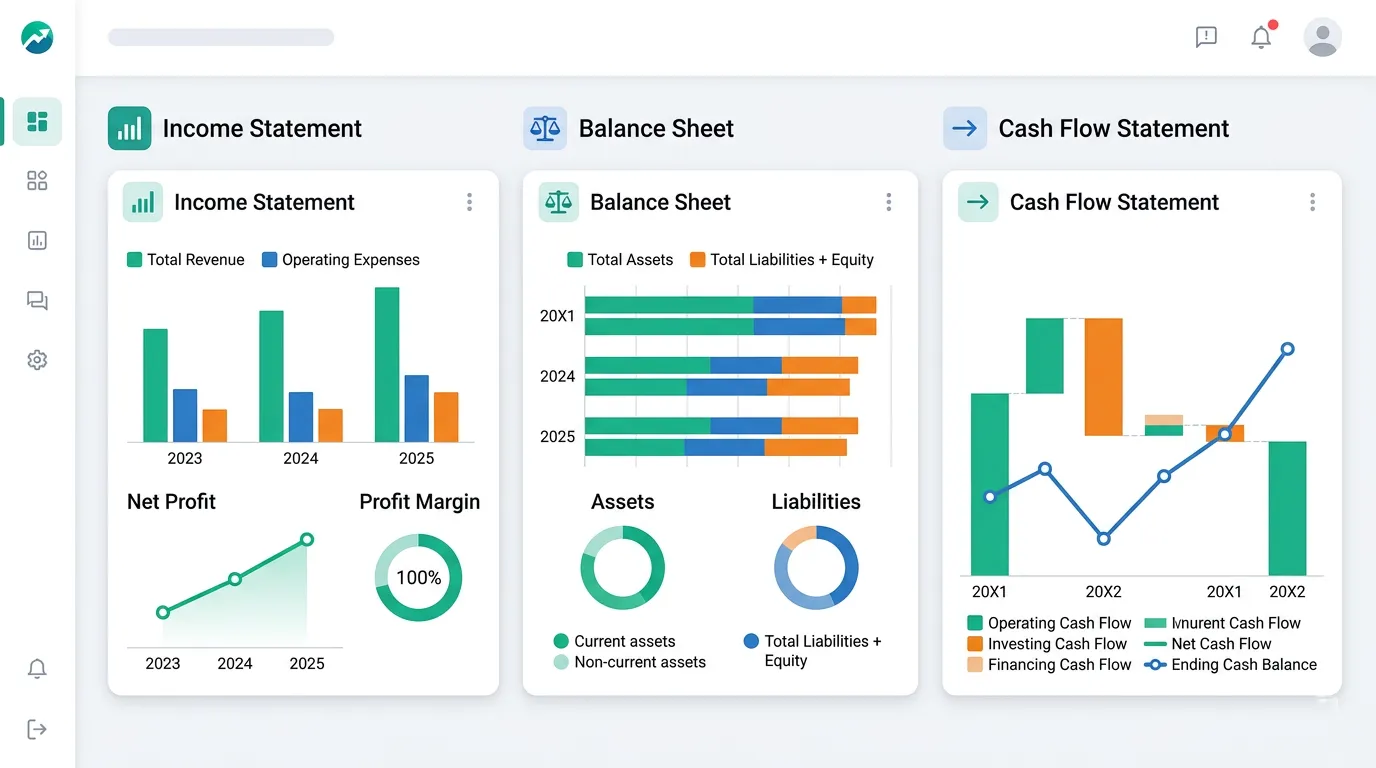
Every business produces three core financial statements. Together they tell the full story of a company’s financial health.
Income Statement (Profit & Loss)
Balance Sheet
Cash Flow Statement
Think of them like different camera angles of the same business.
StatementWhat It ShowsKey QuestionIncome StatementProfitability over timeAre we making money?Balance SheetAssets, liabilities, equityWhat do we own and owe?Cash Flow StatementMovement of cashDo we have enough cash to operate?
A founder doesn’t read these documents line by line like an accountant. Instead, they look for signals that affect strategy and growth.
How to Read Financial Statements Through a Founder’s Lens
Before diving into each statement, understand one mindset shift. Accountants focus on accuracy and compliance.
Founders focus on decisions and outcomes. When reading company financial reports, founders typically ask:
Is revenue growing fast enough?
Are margins improving or shrinking?
How long can we operate with current cash?
Are expenses aligned with strategy?
For example: A SaaS founder in the United States might check whether customer acquisition costs are rising faster than revenue. A retail startup in the UK may focus on inventory costs and gross margins. A manufacturing company in Eastern Europe might monitor working capital and debt levels.
The key is simple: numbers are tools for decisions, not just reports.
Understanding the Income Statement (Profit & Loss)
The income statement shows how much money a business earns and spends over a specific period. Typical periods include:
Monthly
Quarterly
Annually
Basic Income Statement Structure
Revenue
Cost of Goods Sold (COGS)
Gross Profit
Operating Expenses
Operating Profit
Net Profit
Example
Imagine a small software company:
Revenue: $500,000 (≈ €460,000)
Cost of service delivery: $120,000
Operating expenses: $250,000
Result:
Gross Profit: $380,000
Net Profit: $130,000
What Founders Should Look For
Instead of memorizing accounting rules, focus on three metrics. 1. Revenue Growth Is the company expanding? Early-stage startups often prioritize revenue growth over profit.
2. Gross Margin This shows how efficient your core product is. Typical ranges:
SaaS: 70–90%
E-commerce: 20–40%
Manufacturing: 10–30%
3. Operating Expenses Look at spending categories:
Marketing
Salaries
Technology
Operations
If revenue grows 20% but expenses grow 60%, the business model may not scale.
How Founders Use the Balance Sheet
The balance sheet shows what a company owns and what it owes at a specific moment. The basic formula: Assets = Liabilities + Equity
What Each Section Means
Assets Things the company owns:
Cash
Inventory
Equipment
Accounts receivable
Liabilities Things the company owes:
Loans
Credit lines
Accounts payable
Taxes due
Equity The value belonging to shareholders or founders.
Balance Sheet Example
A startup might have: Assets
Cash: $200,000
Equipment: $50,000
Accounts receivable: $80,000
Total assets: $330,000 Liabilities
Bank loan: $120,000
Supplier payments: $40,000
Equity: $170,000
Key Founder Signals
When doing business financial statement analysis, founders focus on: Cash Position How long can the company survive? Many startups fail not from lack of profit but lack of cash.
Debt Levels Too much debt increases risk during downturns. For example, many European SMEs struggled with debt servicing after rising interest rates in recent years. Working Capital
This measures operational efficiency. Retail companies in Canada or the UK often tie up cash in inventory before sales occur.
The Cash Flow Statement: The Survival Metric
Profit does not equal cash. A company can show profit on the income statement but still run out of money. The cash flow statement explains why. It tracks three categories:
Operating cash flow
Investing cash flow
Financing cash flow
Operating Cash Flow
Cash generated from the core business. Positive operating cash flow means the company’s main activity produces real money.
Investing Cash Flow
Money spent on long-term assets:
Equipment
Software
Property
Negative numbers here can be good if they represent growth investments.
Financing Cash Flow
Cash from investors, loans, or debt repayments. Examples:
Venture capital funding
Bank loans
Shareholder investments
A startup raising $2 million (≈ €1.8 million) will show large positive financing cash flow.
Founder Insight
The most important question: How long is the runway? Runway = cash ÷ monthly burn rate. Example:
Cash: $600,000
Monthly expenses: $100,000
Runway = 6 months Investors across Silicon Valley, London, and Berlin often expect 12–18 months of runway.
The 5 Financial Metrics Founders Should Track Monthly

Beyond basic statements, founders monitor a few critical metrics.
1. Gross Margin
Indicates product profitability. Formula: Revenue – COGS ÷ Revenue
2. Burn Rate
How quickly the company spends cash. Example: Startup spends $80,000 monthly but earns $30,000. Burn rate = $50,000 per month.
3. Runway
How long cash will last. Runway helps founders plan fundraising.
4. Customer Acquisition Cost (CAC)
Total marketing and sales cost ÷ new customers. If CAC is $200 but each customer only generates $150, the model fails.
5. Lifetime Value (LTV)
Total revenue expected from a customer. Healthy businesses often aim for: LTV ≥ 3 × CAC
Common Financial Statement Mistakes Founders Make
Even experienced founders sometimes misinterpret financial data.
Mistake 1: Confusing Revenue With Profit
Revenue can grow rapidly while profits shrink. High marketing costs often create this issue in early-stage startups.
Mistake 2: Ignoring Cash Flow
Many companies collapse despite strong revenue. Cash management is often the real problem.
Mistake 3: Looking at Reports Too Infrequently
Some founders review financial statements once per quarter. Better practice:
Monthly reviews
Weekly cash monitoring
Mistake 4: Overlooking Unit Economics
Unit economics explain whether each sale actually makes money. This is especially critical for:
SaaS
Subscription products
Marketplaces
A Simple Founder Framework for Reading Financial Statements
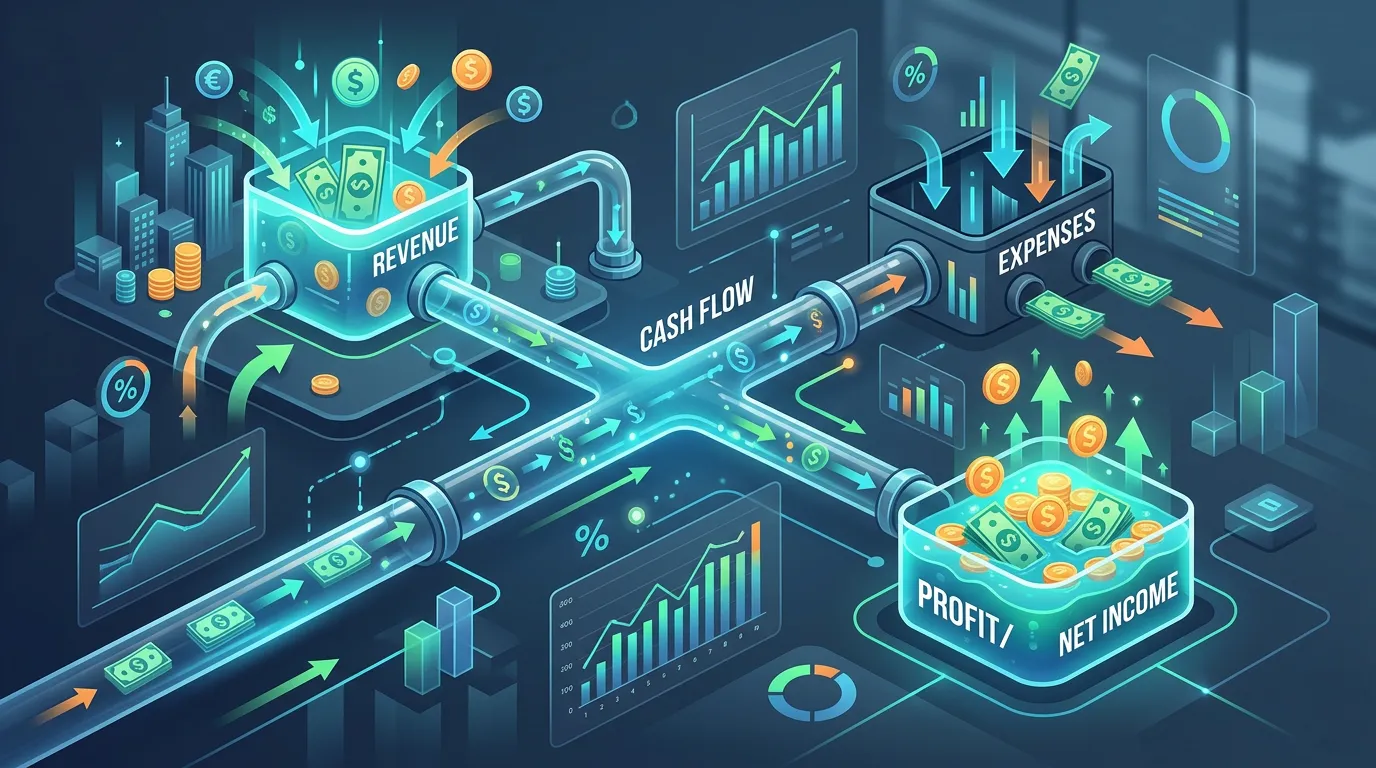
Instead of analyzing dozens of metrics, use this quick framework.
Step 1: Check Revenue Growth
Is revenue increasing month to month?
Step 2: Review Gross Margin
Is the product becoming more efficient?
Step 3: Analyze Expenses
Which costs are growing fastest?
Step 4: Evaluate Cash Position
How many months of runway remain?
Step 5: Look for Financial Trends
Single months can mislead. Look at 3-month and 12-month trends.
Practical Tools Founders Use to Track Financial Statements
Modern founders rarely rely only on spreadsheets. Common tools include:
Accounting platforms
Financial dashboards
Startup analytics tools
These tools automatically generate financial reports and simplify reading company financial reports. However, tools don't replace understanding. A founder still needs to interpret the numbers strategically.
Why Financial Literacy Gives Founders an Advantage
Across global startup ecosystems—from Silicon Valley to Stockholm—investors repeatedly emphasize one trait: Founders who understand their numbers raise capital more easily. Why? Because financial literacy signals:
Operational discipline
Strategic thinking
Risk awareness
A founder who clearly explains revenue growth, margins, and runway inspires confidence. This skill becomes even more critical during economic uncertainty.
Conclusion: Financial Statements Are a Founder’s Navigation System
Learning how to read financial statements isn’t about becoming an accountant. It’s about understanding the health of your business.
When founders read financial statements effectively, they gain clarity on:
Profitability
Cash flow
Growth sustainability
Strategic risk
The three core statements—income statement, balance sheet, and cash flow statement—tell a complete financial story when viewed together.
The key takeaway: Numbers don’t run your business—but ignoring them can sink it.
Start by reviewing your financial statements monthly, focusing on revenue growth, margins, expenses, and runway. Over time, patterns will emerge that help you make better decisions.