
Expanding into new markets is one of the fastest ways to access growth—but it’s also one of the easiest ways to drain cash if done wrong. Many companies underestimate the complexity of global expansion strategies, leading to overspending, poor market fit, and failed launches.
For CFOs and marketing leaders, the challenge is clear: how do you scale internationally while maintaining financial discipline?
This guide breaks down practical, cost-effective ways to enter new markets without burning your budget. You’ll learn how to validate demand, choose the right entry model, and avoid the most common mistakes companies make when going global.
Why Global Expansion Fails (and How to Avoid It)
Before diving into execution, it’s important to understand where most companies go wrong.
Common reasons for failure
Overestimating demand without proper research
High upfront investment in infrastructure or hiring
Ignoring cultural and regulatory differences
Using a “copy-paste” strategy from the home market
For example, a US-based SaaS company might assume its pricing model will work in Europe. However, customers in Germany or France often expect more localized support and different billing structures, which increases operational costs if not planned in advance.
Key takeaway
Successful global expansion strategies are lean, data-driven, and iterative—not big-bang launches.
Step 1: Validate Demand Before You Invest

The biggest budget killer in international expansion is entering a market without proven demand.
Low-cost validation methods
Instead of launching fully, test demand using:
Localized landing pages
Create region-specific pages targeting keywords like “software solution UK” or “best CRM in Germany.”Paid ads with small budgets
Run targeted campaigns ($500–$2,000 or €450–€1,800) to measure:Click-through rates
Conversion rates
Cost per acquisition
Waitlists or pre-orders
Gauge real interest before committing resources
Example
A Canadian e-commerce brand tested expansion into the UK by running localized ads and offering GBP pricing. The result: strong conversion rates without setting up local warehouses upfront.
Pro tip
Focus on signals of intent, not vanity metrics. Traffic means nothing if it doesn’t convert.
Step 2: Choose the Right Market Entry Strategy
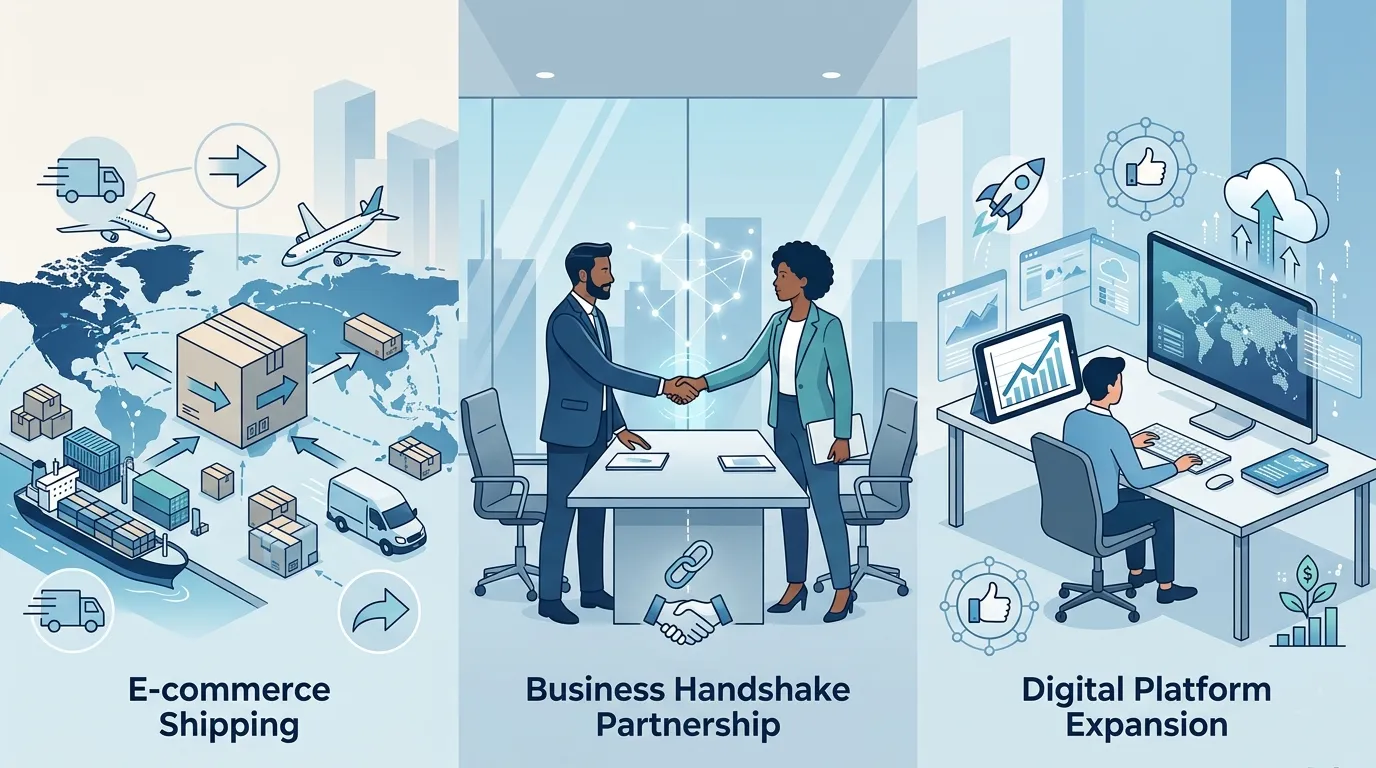
Not all expansion models are equal. The wrong choice can multiply costs quickly.
Common market entry options
1. Direct Export (Low Cost) Sell directly from your existing operations.
Best for: E-commerce, digital products
Pros: Minimal investment
Cons: Slower delivery, limited localization
2. Partnerships or Distributors Work with local players to enter the market.
Best for: B2B, physical products
Pros: Local expertise, faster market access
Cons: Lower margins
3. Local Subsidiary (High Investment) Set up a legal entity in the new country.
Best for: Long-term expansion
Pros: Full control
Cons: High cost ($50,000+ / €45,000+)
4. Digital-First Expansion (Most Cost-Effective) use online channels before physical presence.
Best for: SaaS, services
Pros: Scalable and low risk
Cons: Requires strong digital marketing
Strategic insight
Start with low-commitment models, then scale based on performance.
Step 3: Localize What Matters (Not Everything)
Localization can quickly become expensive if overdone.
What to prioritize
Language (core pages only)
Pricing structure (local currency, psychological pricing)
Payment methods (e.g., SEPA in Europe, credit cards in the US)
Customer support expectations
What to avoid early on
Full website translation
Large local teams
Custom product development
Example
A US SaaS company entering Western Europe localized:
Homepage
Pricing page
Checkout
They avoided translating blog content initially, saving thousands while still improving conversions.
Key principle
Optimize for ROI-driven localization, not perfection.
Step 4: Build a Lean Go-To-Market Plan

A structured but lean approach keeps costs under control.
Simple framework for entering new markets
Phase 1: Research
Market size and demand
Competitors
Pricing benchmarks
Phase 2: Test
Run ads
Launch landing pages
Collect leads
Phase 3: Launch (Soft)
Limited product offering
Small customer base
Focus on feedback
Phase 4: Scale
Expand marketing
Improve localization
Increase investment
Budget allocation example
40% → Testing and validation
30% → Marketing
20% → Localization
10% → Operations
This phased approach reduces risk and allows data to guide spending decisions.
Step 5: Manage Costs Across Borders

Cost control is critical for sustainable expansion.
Key cost areas to monitor
1. Customer Acquisition Cost (CAC) Track CAC by region. It often varies significantly.
US: Higher competition, higher CAC
Eastern Europe: Lower CAC but smaller market size
2. Logistics and Fulfillment For physical products:
Shipping costs
Import duties
Delivery times
3. Compliance and Legal
GDPR in Europe
Tax regulations
Business registration costs
Cost-saving strategies
Use third-party logistics (3PL) instead of building warehouses
Outsource customer support initially
Use global payment platforms to reduce setup costs
Example
An Australian brand expanding into the EU used a 3PL provider, reducing upfront costs by over $30,000 (€27,000+).
Step 6: Align Marketing with Local Behavior
Marketing that works in one country often fails in another.
Key differences to consider
Messaging tone
US: Direct and bold
UK/EU: More subtle and trust-focused
Channels
US: Paid ads dominate
Europe: Organic and partnerships often perform better
Trust signals
Reviews and testimonials
Local case studies
Practical approach
Instead of reinventing your strategy:
Adapt top-performing campaigns
Test small variations
Double down on what works
Example
A US fintech company entering the UK improved conversions by:
Adding local testimonials
Using GBP pricing
Highlighting compliance standards
Step 7: Avoid These Costly Expansion Mistakes
Even strong strategies fail due to execution errors.
Top mistakes to avoid
Expanding too fast
Scaling before validating demandOver-hiring early
Building large teams before revenueIgnoring regulations
Leading to fines or delaysMispricing products
Not adjusting for local purchasing powerLack of focus
Entering multiple markets at once
Rule of thumb
Focus on one or two markets at a time, then expand further once profitable.
Conclusion: Scale Smart, Not Fast
Global expansion is not about moving quickly—it’s about moving strategically and efficiently. The most successful companies:
Validate demand before investing
Choose cost-effective entry strategies
Localize selectively
Scale based on real data
For CFOs and marketing leaders, the goal is simple: maximize growth while minimizing unnecessary risk and spend.
Key takeaway
Start small, learn fast, and scale what works.
Next step
Pick one target market and run a low-cost validation test within the next 30 days. The insights you gain will guide your entire global expansion strategy.