The biggest difference between companies that grow fast and those that struggle often comes down to one thing: the business model. A great product matters, but the structure of how you create value, deliver it, and earn revenue can determine long-term success.
In 2026, the global economy is more digital, more platform-driven, and more competitive than ever. Businesses across the United States, the UK, Europe, Canada, and Australia are experimenting with new ways to build sustainable revenue and scale quickly.
This guide explores the business models that win in 2026, focusing on subscriptions, marketplaces, platforms, and emerging hybrid models. Whether you’re a founder launching a startup, a creator building an audience, or a professional exploring new opportunities, understanding these models can help you build a resilient business.
A business model answers three essential questions:
How do you create value?
How do you deliver that value?
How do you capture revenue?
In the past, many companies relied on straightforward models: sell a product once and move on. But today’s most successful companies focus on long-term relationships, recurring revenue, and scalable digital platforms.
Three major forces are shaping the future business models in 2026:
Digital transformation – businesses operate online and globally by default
Customer expectations – people prefer convenience, personalization, and flexibility
AI and automation – companies can scale operations faster than ever
As a result, the most successful organizations are adopting scalable business models designed to grow without dramatically increasing costs.
Let’s explore the most powerful models dominating the global market.
1. The Subscription Business Model: Recurring Revenue at Scale
The subscription business model continues to dominate industries ranging from software to food delivery. Instead of selling once, businesses charge customers monthly or yearly for ongoing access.
Why subscriptions work
Subscriptions create predictable income and stronger customer relationships. Benefits include:
Recurring revenue
Higher customer lifetime value
Easier financial forecasting
Continuous engagement with users
For example:
A SaaS platform might charge $20–$50 per month for access.
A professional tool in Europe might cost €15–€40 monthly.
Successful subscription examples
Companies in many regions rely heavily on subscriptions:
Software companies in the US use SaaS pricing tiers.
Media platforms in the UK and EU rely on digital memberships.
Fitness and education apps globally offer subscription access.
When subscriptions work best
This model succeeds when you provide ongoing value, such as:
Software or digital tools
Learning platforms
Content memberships
Health or productivity apps
curated product deliveries
Common mistakes
Avoid these traps:
Charging subscriptions for one-time value
Complicated pricing tiers
Poor customer onboarding
A simple rule: subscriptions must solve a recurring problem.
2. Marketplace Business Models: Connecting Buyers and Sellers
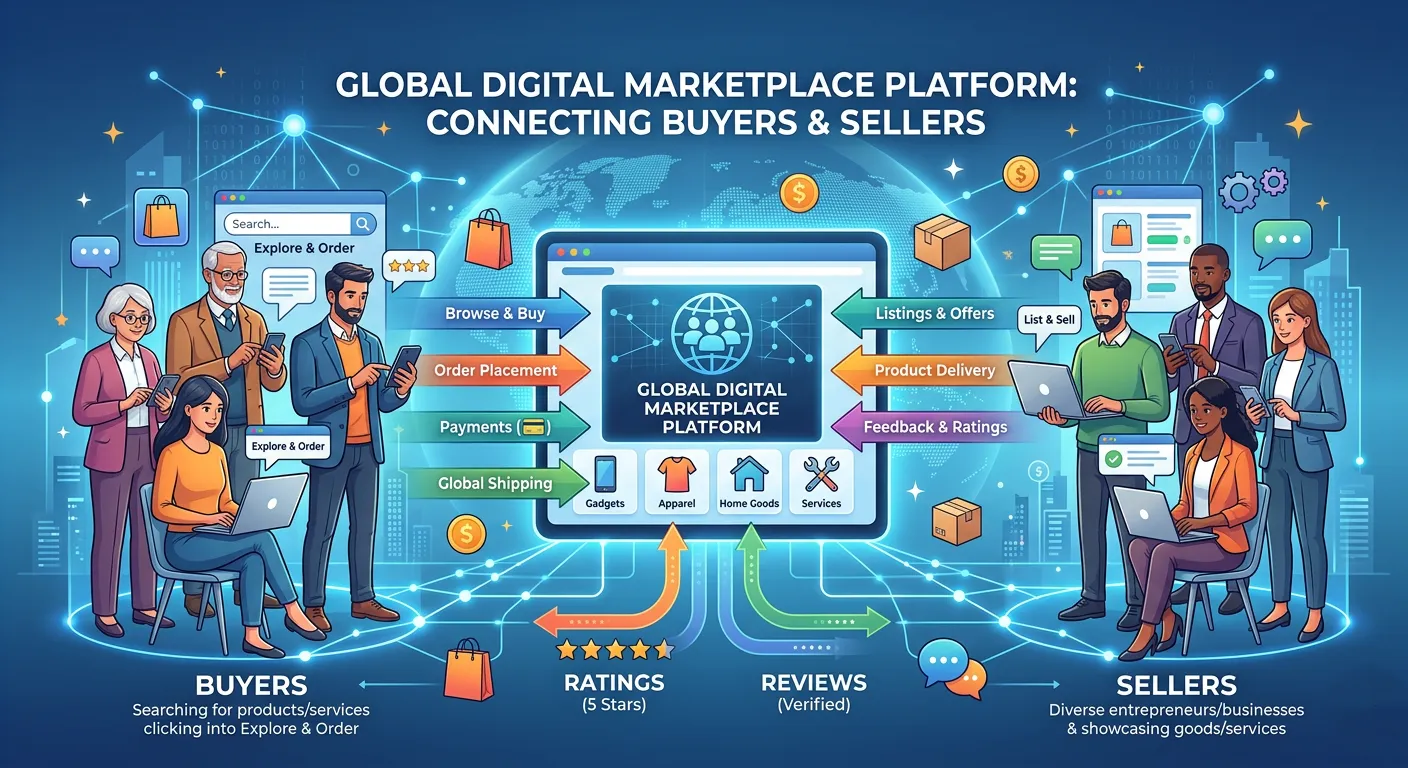
Another powerful model among business models that win in 2026 is the marketplace business model. Instead of selling products directly, marketplaces connect two groups:
Buyers
Sellers
The platform earns money through commissions, listing fees, or service charges.
Why marketplaces scale so well
Marketplaces benefit from network effects. As more sellers join, buyers get more options. As more buyers arrive, sellers gain more opportunity.
This creates a powerful growth loop.
Common marketplace industries
Marketplaces now exist in nearly every sector:
E-commerce
Freelance services
travel and hospitality
online education
digital assets
For example:
Freelance platforms connecting global clients and professionals
European second-hand marketplaces gaining popularity
property rental platforms in North America
Marketplace monetization methods
Popular strategies include:
Transaction fees (5–20%)
Seller subscriptions
promoted listings
payment processing fees
Challenge: the “cold start problem”
New marketplaces struggle because they initially have too few buyers or sellers. A common strategy is to focus on one niche market first, such as:
designers
tutors
local services
Once traction appears, expansion becomes easier.
3. The Platform Economy: Building Digital Ecosystems
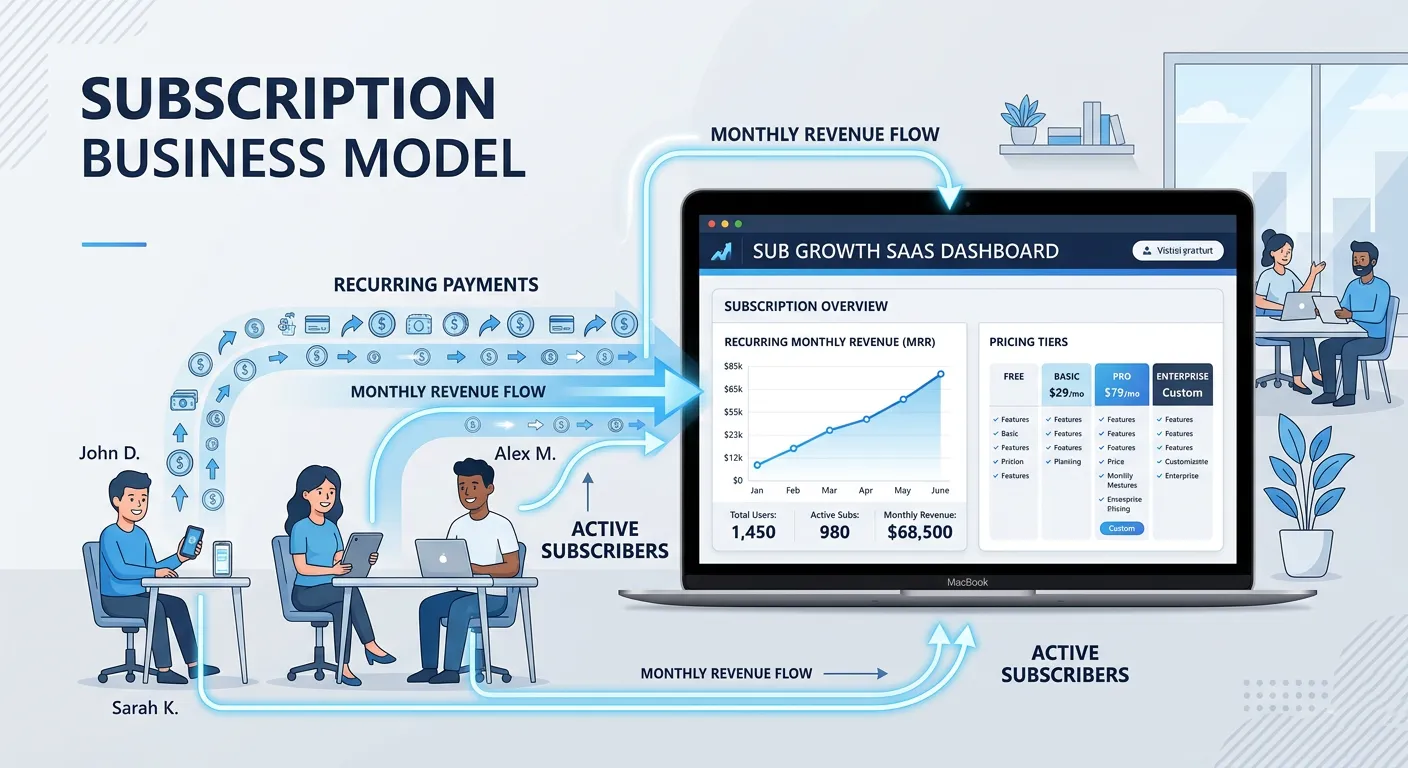
The platform economy business model goes beyond simple marketplaces. Platforms create entire ecosystems where multiple participants interact.
Platforms typically connect:
users
developers
creators
businesses
Examples of platform ecosystems
Many of the world’s largest companies operate platforms:
app stores
social media networks
developer platforms
creator monetization ecosystems
A single platform may host millions of businesses or creators.
Why platforms dominate modern markets
Platforms benefit from exponential scaling. Once infrastructure is built, growth becomes easier because users create value for each other. For example:
creators attract audiences
audiences attract advertisers
advertisers fund the ecosystem
Key platform revenue streams
Common monetization methods include:
advertising
subscription upgrades
digital goods
transaction fees
developer revenue sharing
In both across markets, platform companies increasingly combine multiple revenue streams rather than relying on just one.
4. The Creator Economy Business Model
In 2026, individuals are increasingly building businesses around audience ownership. The creator economy allows people to monetize knowledge, creativity, or expertise through digital platforms.
Popular creator revenue streams
Creators often combine several income sources:
memberships
online courses
brand partnerships
paid newsletters
digital products
For example:
a business educator may sell a $49 online course
a writer might offer a £8 monthly newsletter subscription
Why this model works globally
The creator economy thrives because:
distribution is global
production costs are low
niche audiences can sustain profitable businesses
A small but loyal audience can be enough.
Many creators follow the 1,000 true fans strategy—focusing on a small group of engaged supporters rather than millions of casual followers.
5. Hybrid Business Models: Combining Multiple Revenue Streams
One of the biggest trends in innovative business models for startups is hybridization. Companies rarely rely on just one model anymore. Instead, they combine several approaches.
Example hybrid models
A digital platform might include:
subscription access
marketplace transactions
advertising revenue
premium services
This diversification reduces risk and increases lifetime value.
Real-world example structure
A company might earn revenue through:
Basic free access
Premium subscription upgrades
Marketplace commissions
Enterprise partnerships
Many SaaS companies across organisations now use this layered model.
6. AI-Powered Business Models

Artificial intelligence is reshaping scalable business models. Companies now use AI to automate:
customer support
marketing
analytics
product recommendations
This allows startups to operate with smaller teams while serving large audiences.
New AI-driven opportunities
Some emerging models include:
AI content platforms
AI-powered research tools
automated service marketplaces
productivity assistants
For example, a startup could charge:
$10/month for AI writing assistance
€25/month for AI research tools
Because software scales easily, AI businesses can grow globally without physical infrastructure.
7. How to Choose the Right Business Model
Choosing the best model depends on your product, market, and growth goals. Use this simple framework.
Step 1: Identify the core value
Ask:
Are you selling access, products, or connections?
Access → subscriptions
Connections → marketplaces
Tools → SaaS platforms
Step 2: Evaluate scalability
Ask whether the business can grow without proportionally increasing costs. Digital businesses often scale more efficiently than physical ones.
Step 3: Understand customer behavior
Consider:
Do customers need the product repeatedly?
Do they benefit from community or interaction?
Recurring needs favor subscription models. Network interactions favor marketplace or platform models.
Step 4: Start simple
Many founders overcomplicate their business models early. Instead:
launch with one clear revenue stream
validate demand
expand later
Common Mistakes When Designing a Business Model
Even strong products fail because of flawed models. Here are frequent mistakes:
1. Ignoring customer incentives
A marketplace fails if sellers or buyers don’t benefit enough.
2. Pricing too low
Many startups undervalue their products. Sustainable pricing supports growth and innovation.
3. Overreliance on one revenue stream
Diversification increases resilience.
4. Scaling too early
Premature scaling can destroy promising businesses. Focus on product-market fit first.
The Future of Business Models
Looking ahead, several trends are likely to shape the next wave of innovation.
1. Community-driven businesses
Audiences increasingly support brands they trust.
2. AI-augmented companies
Small teams will run large operations using automation.
3. Global-first startups
Digital businesses can launch internationally from day one.
4. Ownership and digital assets
New forms of digital ownership and creator monetization continue to evolve. The businesses that succeed will combine technology, trust, and scalable economic models.
Conclusion: Building a Business That Wins in 2026
Understanding business models that win in 2026 is essential for founders, creators, and professionals navigating a rapidly evolving global economy.
The most successful companies increasingly rely on models that emphasize:
recurring revenue
platform networks
community engagement
AI-powered scalability
Subscriptions provide predictable income. Marketplaces access network effects. Platforms build entire ecosystems. Hybrid models combine the best of each approach.
The key takeaway is simple: your business model should scale with demand rather than fight against it.
If you're building a new venture, start by clearly defining how you create, deliver, and capture value. Then test your model with real customers before expanding.