
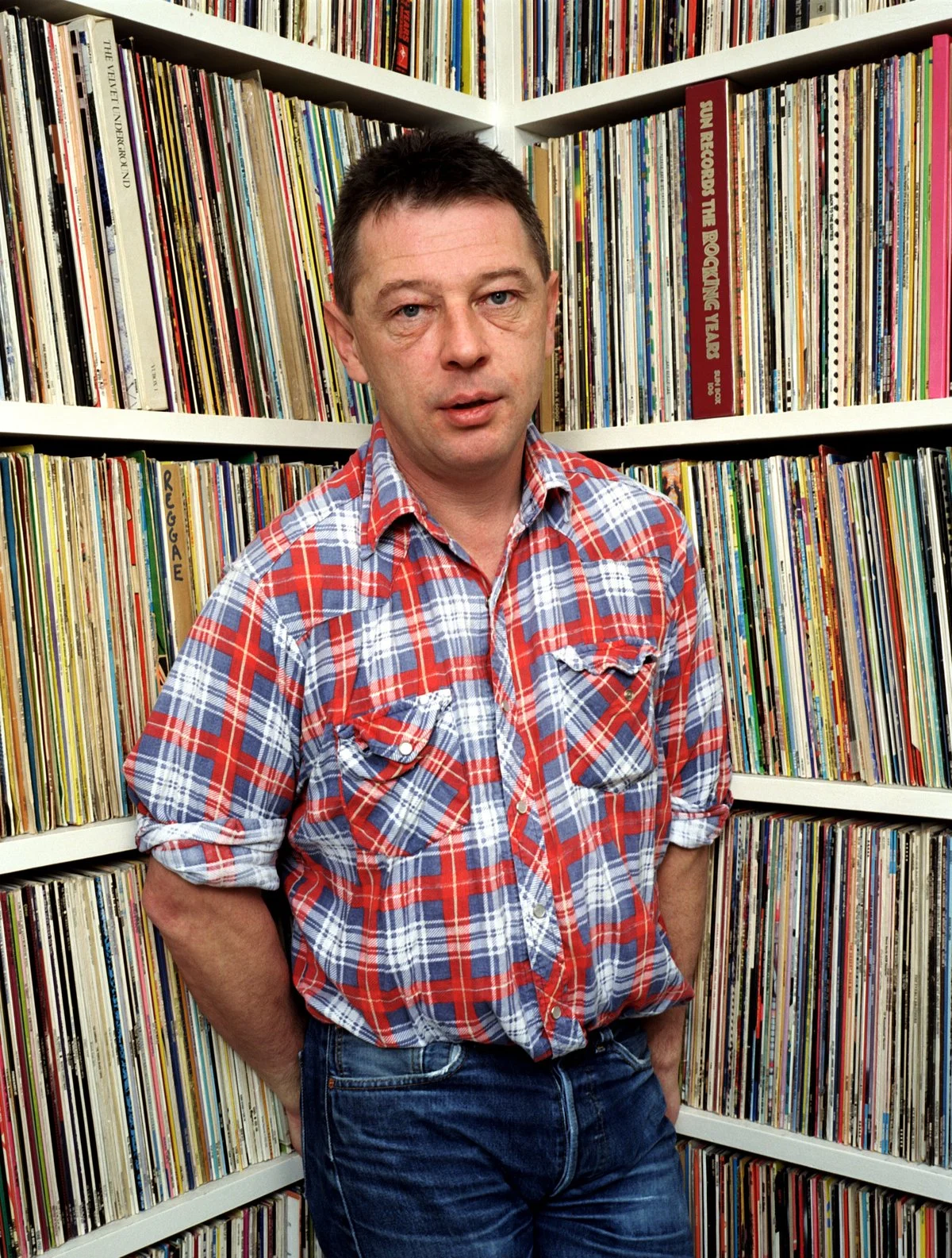
Andy Kershaw, the BBC Radio 1 broadcaster who spent 15 years championing world music, African artists, and global sounds to a mainstream UK audience that had largely never heard them, died on the evening of Thursday, 17 April 2026. His family confirmed he passed away at around 7:30pm on Thursday, April 16. CJ's Awesome 80s He was 66.
It had been revealed in January that Kershaw had been left unable to walk after being diagnosed with cancer. NME The news spread quickly across social media, with the broadcasting community responding throughout the night. For a particular generation of Radio 1 listeners — those who stayed up for his late-night slot alongside John Peel — it marked the end of a very specific era in British radio.
Cause of Death: What We Know
In 2025, cancer affected his spine and left him unable to walk. Doctors diagnosed the condition last summer, with a public announcement in January 2026. Kershaw underwent chemotherapy, radiotherapy and other treatments while maintaining positive spirits and plans for more podcasts. Euro Weekly News
The specific type of cancer was not publicly named by his family. What was confirmed, via his friend and podcast producer Peter Everett, was that Kershaw wrote: "I am in good spirits, feeling very positive and planning another podcast. I am determined not to die before Benjamin Netanyahu, Vladimir Putin, Donald Trump and Ant'n'Dec. That should keep me going for a while." prolificnorth
That was January. He died three months later. The cause was the cancer. No further clinical detail has been confirmed by his family at the time of writing.
Who Was Andy Kershaw? Biography and Career
Andy Kershaw was born in Rochdale in 1959 and went on to study at Leeds University before entering the broadcasting industry. His professional journey began during the early 1980s at Radio Aire in Leeds, where he took on the role of promotions manager. GB News
Becoming head of entertainment at the university in his second year, he put on concerts by The Clash, Elvis Costello and Black Uhuru. prolificnorth He later noted, with some satisfaction, that he failed his degree as a result.
The break that changed everything came not in a radio studio but on the road. After arriving in London in 1984, he secured a job as roadie and driver for singer-songwriter Billy Bragg, and was enlisted as a new presenter for BBC 2's Whistle Test. AOL From roadie to broadcaster in under a year — that trajectory alone tells you something about both his personality and the era.
Live Aid 1985: The Defining Moment
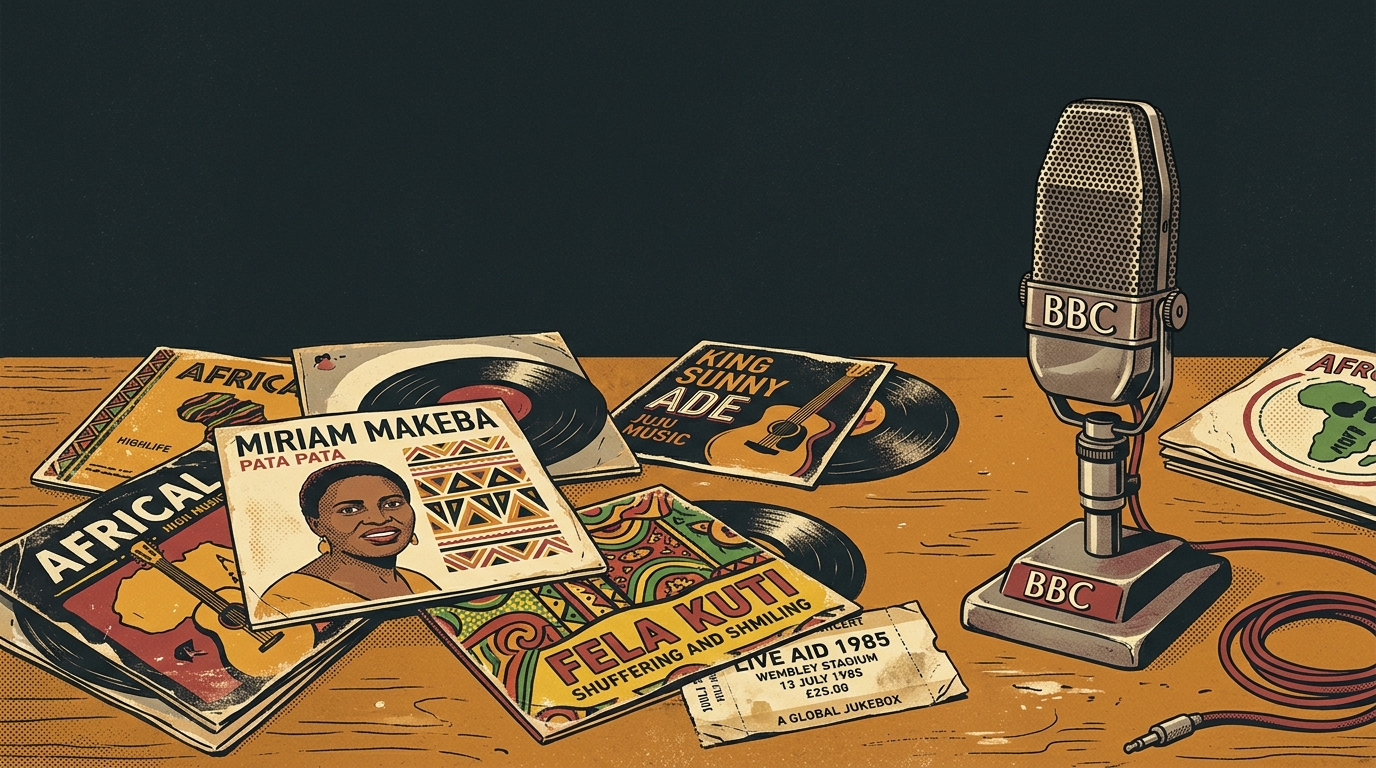
The following year he was selected as one of the BBC presenters covering Live Aid, with later work including the 1994 Rwanda genocide, and the final stages of the Sierra Leone civil war in 2001. NME His presence at Wembley in July 1985 — as one of the faces the BBC put in front of an audience of hundreds of millions — was, for many, their first introduction to a broadcaster whose instincts ran completely counter to mainstream radio convention.
BBC Radio 1: 15 Years, an Axe, and No Apology
His move to Radio 1 came in the summer of 1985, where many regarded him as a potential heir to the legendary John Peel. During his tenure at the station, his sister Liz Kershaw also broadcast there between 1987 and 1992. GB News
The pairing of Kershaw and Peel on Radio 1's schedule was, for a certain kind of music listener, the entire point of the station. Back to back late-night shows. No concession to the charts. Artists from Malawi, South Africa, the Congo — music that had no commercial radio home anywhere else in the UK.
He then got his own show on Radio 1 the following year, which he presented for 15 years before being sacked, as his website states, "to be replaced by another dance music programme." AOL
He did not go quietly, and he did not pretend the decision was anything other than what it was.
Radio 3, Radio 4, and War Reporting
After Radio 1, the career pivoted in ways that surprised people who had him pegged as simply a music presenter. Following his departure from Radio 1, Kershaw embarked on a new chapter at Radio 4, contributing reports to the Today Programme while travelling extensively to explore both international music and political hotspots. At Radio 3, he described his approach as continuing "to ignore categories and mix it all up", undertaking musical journeys through Iraq, Iran and North Korea. GB News
He reported on the Rwanda genocide in 1994. He covered the Sierra Leone civil war. He filed radio diaries from North Korea. The same instinct that drove him to put Zimbabwean mbira music on late-night Radio 1 drove him toward reporting on conflicts that British media found difficult to reach.
He returned to BBC in 2011 and hosted Music Planet alongside Lucy Duran, seeking out talented musicians from various isolated locations globally. Since then, he released the No Off Switch autobiography and launched his own podcast in 2021, which saw him showcase the eclectic new artists he had been enjoying. NME
Personal Life
Andy Kershaw's Sister: Liz Kershaw
The Kershaw name is a double entry in British broadcasting history. Kershaw was the brother of fellow broadcaster Liz Kershaw Barrhead News, who presented on BBC Radio 1 from 1987 to 1992, overlapping directly with her brother's tenure. Both grew up in Rochdale. Both ended up at the BBC. Their coexistence on the same station's schedule remains one of the more unusual footnotes in Radio 1 history.
Marriage, Breakdown, and Personal Struggles
This is the part of Andy Kershaw's story that the tributes have handled gently, and it deserves an honest account.
He became a tabloid fixture in 2008 after his 17-year marriage ended over infidelity on his part, which he admitted to. His ex-wife, Juliette Banner, left him and obtained a court order to keep him away from their two children; Kershaw repeatedly broke the terms of the order and was imprisoned three times before going on the run. He ended up developing an alcohol dependency and was temporarily homeless. AOL
He wrote about it himself, at length, in his 2012 autobiography No Off Switch. "Nobody, not even my allies within the serious media, bothered to look at what was really going on," he told The Independent. "All I wanted to do was see my children, so why was I in jail? Why was I on the run? It was ridiculous, insane." AOL
Kershaw leaves behind two children. The relationship with Juliette Banner, and its aftermath, was a documented and significant chapter in his life. Noting it here is not sensationalism — it is part of the record of who he was.
Industry Tributes
The response from the broadcasting world was immediate. The Stranglers said: "We're so sorry to hear of the passing of our dear old friend Andy Kershaw. We shared many times together over the years, both on and offstage, and his enthusiasm for whatever he was involved in, his intelligence, and extremely sharp wit, were truly infectious. It was always a pleasure to be in his company. There was never a dull moment. Our thoughts are with his family." prolificnorth
Radio 3's official Instagram stated: "We are very sad to hear that the much-loved broadcaster Andy Kershaw has passed away at the age of 66." prolificnorth
Across social media, the tributes converged on a consistent theme: that Kershaw was a broadcaster who genuinely loved music rather than performed enthusiasm for it. Fans described him as "one of those DJs you knew actually did love music" NME, and recalled the experience of discovering entire continents of sound through his late-night Radio 1 slot. One tribute characterised him as someone who "brought the world to our ears." Another noted how rare it was, in the mid-1980s, to hear an unashamedly northern accent on national BBC radio — let alone one playing South African township music at midnight.
Legacy: What Andy Kershaw Actually Changed
The standard obituary line about Kershaw is that he "championed world music." That undersells it. The specific contribution was this: he gave regular, prominent BBC airtime to artists from sub-Saharan Africa, the Caribbean, and Central Asia at a time when no other mainstream radio presenter in the UK was doing so. Not as a curiosity. As the main event.
"I think initially Radio 1 wanted another [John] Peel," he said, "but I got quickly bored of those awful, insipid demo tapes I was receiving from Liverpudlian indie acts, especially as I was beginning to discover properly fantastic, amazing music from Malawi, the Congo, South Africa." Barrhead News
That pivot — from the expected indie-guitar lane to African music, South American rhythms, North Korean folk recordings — defined his career more than any single show or moment. He often played sessions back to back with John Peel, giving entire evenings of rare sounds to music fans not interested in the regular pop usually favoured by BBC Radio One. NME
Kershaw was part of the BBC Radio 1 generation of the mid-1980s that believed a national broadcaster had a responsibility to reflect the world beyond the UK charts. That generation is now gone. Peel died in 2004. Kershaw died this week. The argument they made — that a mass-audience public broadcaster should carry music no commercial station would touch — has largely been lost. But the music they played has not.
Conclusion: Three Things That Mattered
1. He built a global music audience on a pop station. Kershaw's Radio 1 slot ran from 1985 to 2000. In that time, he gave consistent BBC airtime to artists from Africa, Latin America, and the Caribbean — not on a specialist station or a World Service frequency, but on the same network that played the Top 40.
2. He was more than a DJ. His reporting career — Rwanda, Sierra Leone, North Korea, Iraq — placed him alongside serious international journalists. He brought the same compulsive curiosity to conflict zones that he brought to obscure record shops in Lagos.
3. He told the truth about his own failures. The imprisonment, the alcohol dependency, the estrangement from his children — Kershaw documented all of it, publicly, in his own words. That takes a specific kind of honesty.
The detail that encapsulates why he mattered: when his Radio 1 show ended in 2000, his final broadcasts featured sessions from Willie Nelson and Lou Reed. Not a greatest-hits sendoff. Not the format the BBC wanted. Just two artists he thought were worth hearing, until the last possible moment.