
In the winter of 2022, four emperor penguin colonies on the Bellingshausen Sea coast raised almost no chicks. The ice beneath their breeding grounds broke up before the chicks had grown waterproof feathers. Most drowned. Researchers from the British Antarctic Survey, reviewing satellite imagery of the affected colonies, described it as near-total breeding failure — an event with no precedent in the observational record for those sites.
This wasn't a story about penguins. It was a signal from the Southern Ocean's food web — a system so finely calibrated to the presence and timing of sea ice that even a single anomalous season leaves a visible biological scar.
Antarctica has entered what glaciologists and oceanographers now formally refer to as a low-ice era. The term is not rhetorical. It reflects a statistically documented shift: since 2016, Antarctic sea ice has repeatedly set record lows, and the 2023 minimum — 1.79 million square kilometres — was nearly one million square kilometres below the previous satellite-era record. The ice that forms each austral winter is forming later, retreating earlier, and covering less area than at any point since continuous satellite observation began in 1979.
The biology is already responding. The question is how far the cascade goes.
The Ice as Infrastructure
To understand why sea ice loss matters ecologically, it helps to think of Antarctic sea ice not as a passive frozen surface but as a living platform — one that structures nearly every level of the Southern Ocean food web.
Beneath winter sea ice, the underside develops a rich layer of ice algae. These algae are the primary winter food source for juvenile Antarctic krill (Euphausia superba), the small, shrimp-like crustaceans that are, in terms of total biomass, among the most ecologically significant animals on earth. Krill are consumed by blue whales, humpback whales, Adélie penguins, emperor penguins, leopard seals, and Antarctic fish species. They are also commercially harvested — the Southern Ocean krill fishery is certified sustainable and feeds aquaculture and pharmaceutical industries globally.
When sea ice retreats earlier in the spring, and forms later in the autumn, juvenile krill lose critical weeks of feeding under ice. Their survival rates drop. Their reproduction is affected. And when krill decline in patches of the Southern Ocean, the ecological vacancy is not simply left open. It is filled — by salps.
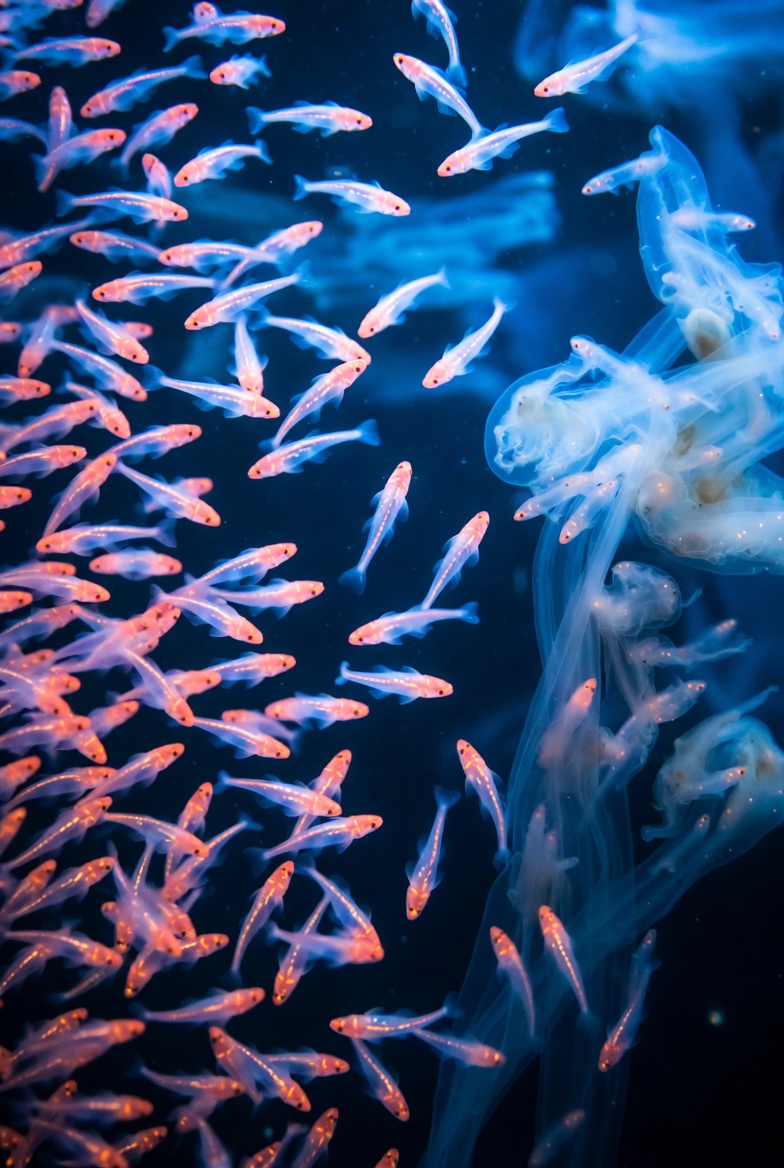
Krill vs. Salps: A Regime Shift in Progress
Salps are barrel-shaped, gelatinous filter feeders that can tolerate warmer, less ice-covered waters that krill cannot. They reproduce rapidly. They consume phytoplankton efficiently. And unlike krill, they are nutritionally sparse — roughly 95% water — and largely inedible to the vertebrate predators that dominate the Southern Ocean food web.
The shift from a krill-dominated to a salp-dominated ecosystem in parts of the Southern Ocean has been documented since at least the 1990s, and the data suggests the trend is accelerating. A 2024 analysis from the Scientific Committee on Antarctic Research (SCAR), drawing on three decades of net tow surveys and combining them with chlorophyll-a satellite data from ESA's Sentinel missions, found that salp abundance in the Scotia Sea and parts of the Southern Indian Ocean has increased significantly in low-ice years. The analysis also found that krill recruitment — the proportion of juveniles surviving to adulthood — was lower in years following winters with below-average sea ice extent.
This is an important distinction. The analysis found correlation, not a fully established causal mechanism. Krill population dynamics are complex, influenced by predation pressure, oceanographic variability, and fishing, not only by sea ice. The current consensus among marine biologists at institutions including the British Antarctic Survey, the Alfred Wegener Institute, and Australia's Antarctic Division is that sea ice is a primary driver of krill recruitment — but that population-level consequences at scale are still being modelled.
That's the consensus. What's still open is the trajectory.
What Phytoplankton Data Is Telling Us
One layer below krill in the food web sits phytoplankton — microscopic marine algae that form the foundation of nearly all ocean productivity. In the Southern Ocean, phytoplankton blooms are strongly tied to sea ice dynamics. As sea ice retreats in spring, it releases cold, nutrient-rich meltwater that stratifies the surface ocean and triggers blooms detectable from space via chlorophyll-a satellite data.
But earlier, more extensive ice retreat doesn't necessarily mean bigger blooms. The relationship is non-linear and regionally variable. In some parts of the Southern Ocean, earlier ice retreat leads to earlier, more intense blooms in spring — but those blooms may occur before krill larvae are developmentally ready to exploit them, a timing mismatch that reduces feeding efficiency. In other regions, changes in ocean stratification are altering the depth at which nutrients are available, potentially reducing bloom intensity.
A 2025 study from NOAA's Pacific Marine Environmental Laboratory, published in Geophysical Research Letters, used a 25-year chlorophyll-a satellite record alongside Argo float temperature data to map how phytoplankton bloom timing has shifted across Southern Ocean sectors. The findings were regionally heterogeneous — meaning there was no single, uniform trend. In the Ross Sea, blooms were occurring roughly 8 days earlier than in 2000. In parts of the Weddell Sea, bloom intensity had declined. The authors were careful to note that 25 years is a short baseline for detecting long-term ecological trends, and that satellite chlorophyll-a data has known limitations in polar regions due to persistent cloud cover and low sun angles.
That's a methodological caveat worth keeping. It doesn't invalidate the data. It constrains how confidently we can generalise it.
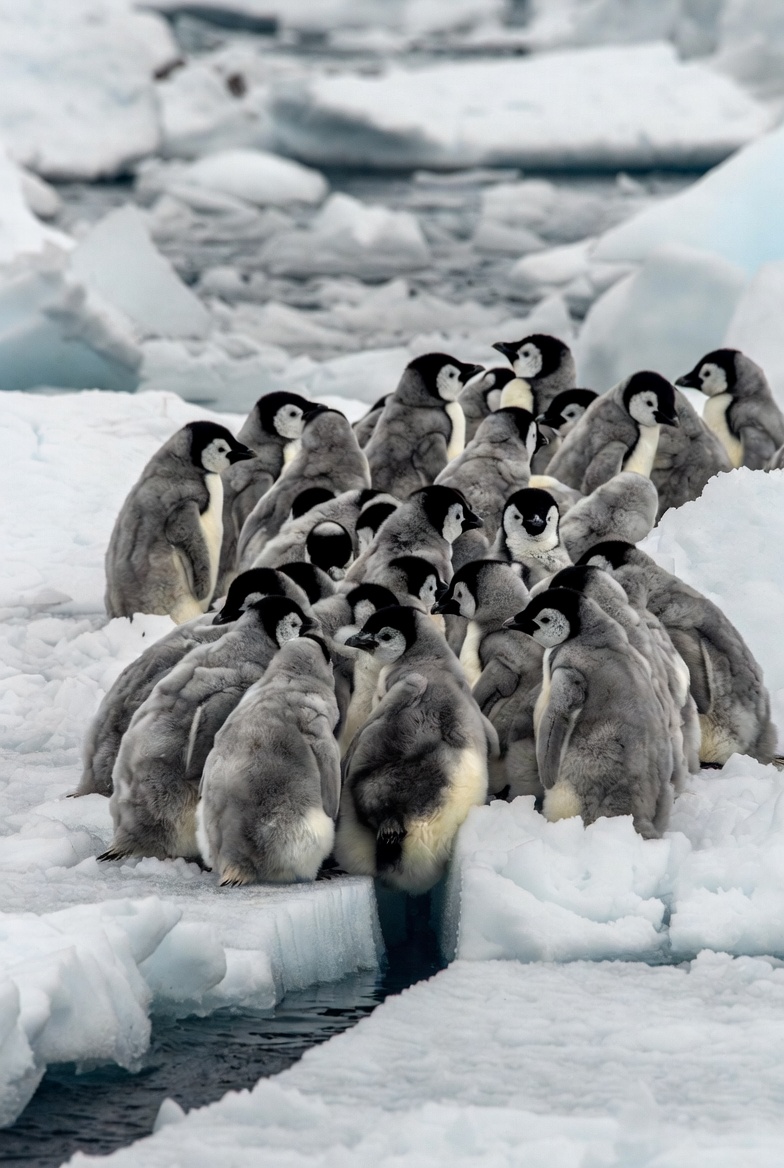
Emperor Penguins and the Breeding Floor
Emperor penguins are perhaps the most visible indicator species of sea ice health — not because they are the most sensitive ecologically, but because their breeding behaviour is so precisely ice-dependent that disruptions are dramatic and satellite-visible.
Emperors breed on fast ice — sea ice attached to the Antarctic coastline — during the austral winter. They require stable ice from roughly April through January, a 9-month window during which eggs are laid, hatched, and chicks grow to fledging weight. If the ice breaks up before chicks are ready, the chicks cannot survive open water.
The 2022 Bellingshausen breeding failure, reported by the British Antarctic Survey in Nature Communications Earth & Environment, affected four of the five known colonies in that sector. It is, as the authors noted, a preliminary finding from a single catastrophic season. Population trend data across all 66 known emperor penguin colonies is not yet showing a clear decline at the species level. But the event demonstrated, with unusual clarity, how sea ice timing translates directly into biological outcomes.
The U.S. Fish and Wildlife Service listed the emperor penguin as a threatened species in 2022 under the Endangered Species Act — a classification that triggers specific regulatory protections and research priorities. The decision was based primarily on climate projections for sea ice through 2100, not current population data.
The Carbon Dimension
The Southern Ocean food web is not just a matter of ecological interest. It is connected to one of the most consequential climate processes on earth: oceanic carbon storage.
Phytoplankton absorb CO₂ during photosynthesis. When they die, a fraction of that carbon sinks to the deep ocean — a process called the biological carbon pump. Krill enhance this process: their faecal pellets are dense and sink rapidly, carrying carbon to depths where it can be sequestered for centuries. Salps, by contrast, produce carbon-poor waste that sinks more slowly and is remineralised at shallower depths.
A shift from krill-dominated to salp-dominated Southern Ocean ecosystems would, in principle, reduce the efficiency of the biological carbon pump in one of the ocean's most productive carbon sinks. The carbon storage Southern Ocean provides is estimated at roughly 40% of global oceanic CO₂ uptake. How that changes under continued Antarctic sea ice decline is, as of 2025, one of the most consequential open questions in climate science.
Research suggests the effect is real. Its magnitude is not yet quantified with confidence.
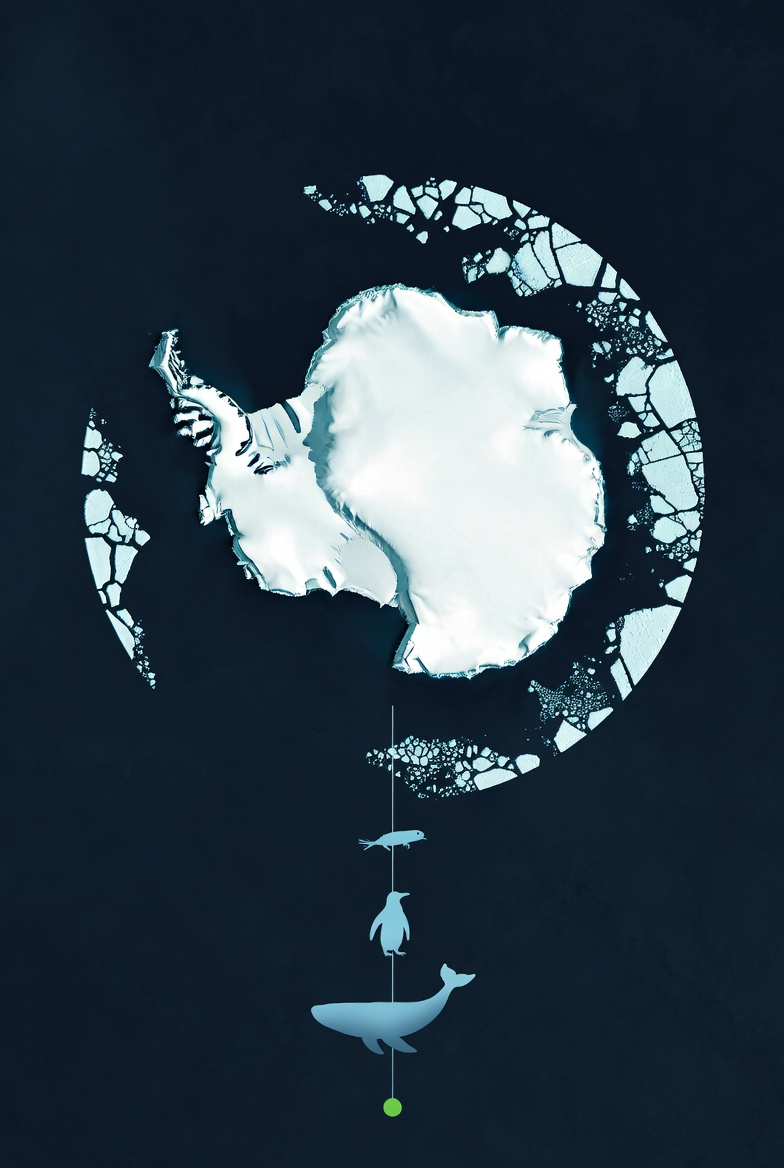
Antarctic Overturning Circulation: The Deeper Risk
Underneath the sea ice and food web dynamics lies a deeper structural concern: the Antarctic Overturning Circulation, the system of ocean currents driven by the sinking of cold, dense water near Antarctica. This circulation distributes heat, nutrients, and oxygen throughout the global ocean. It is also a primary mechanism by which the Southern Ocean sequesters carbon at depth.
Research published in Nature in 2023, led by the University of New South Wales, used oceanographic models and observational data to project that the Antarctic Overturning Circulation could slow by 40% by 2050 under current emissions trajectories. The study attracted significant attention — and significant peer scrutiny. Several researchers, including groups at NOAA and the Max Planck Institute for Meteorology, noted that the observational record for deep Southern Ocean circulation is short and that model projections carry wide uncertainty ranges.
The finding is best described as a credible warning, not a confirmed forecast. It is being actively investigated.
Three Takeaways
1. The Southern Ocean food web is already showing responses to sea ice loss — in phytoplankton bloom timing, in krill recruitment variability, and in at least one documented, catastrophic emperor penguin breeding failure. These are early signals, not established population-level crises — yet.
2. The shift from krill to salps in low-ice regions is a documented ecological pattern, not a projection. Its long-term trajectory and full consequences for predator populations are still being modelled. The next decade of survey data will be critical.
3. The Southern Ocean's role as a global carbon sink and climate buffer means that ecosystem disruption here has implications that extend far beyond Antarctic biology. The mechanisms connecting sea ice loss to carbon storage efficiency are real — and currently underquantified.
For ongoing data, the Commission for the Conservation of Antarctic Marine Living Resources (CCAMLR) publishes annual krill and ecosystem survey reports at ccamlr.org. The British Antarctic Survey's penguin tracking programme and NSIDC sea ice data together provide the most comprehensive public window into how this system is evolving.